Shingitalis: A Handwritten Font That Brings Authenticity to Your Projects
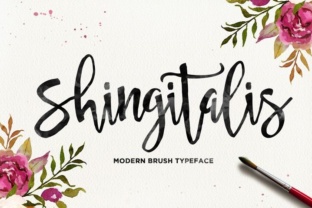
Have you ever searched for a font that feels less like a digital tool and more like a personal note left on a desk? That’s the experience Shingitalis aims to deliver. Crafted by Area Type, this handwritten typeface steps away from the sterile uniformity of standard fonts and leans into the warmth, rhythm, and slight imperfections of natural handwriting. Whether you’re designing a brand identity, laying out a wedding invitation, or building a website that needs a human touch, Shingitalis offers a balance of character and readability that makes it stand out in the crowded world of script and handwritten fonts.
What Makes Shingitalis Different from Other Handwritten Fonts?
Handwritten fonts are abundant, but many fall into two camps: overly polished scripts that lack soul, or messy scribbles that sacrifice legibility. Shingitalis occupies a sweet spot. It retains the organic flow of a real pen on paper—with subtle variations in stroke weight, letter spacing, and baseline drift—yet remains clear enough for body text and headlines alike. The font was carefully developed by Area Type to capture the feel of a handcrafted letter without alienating readers who need to process information quickly.
One of its distinguishing features is the consistent yet relaxed rhythm. Letters connect naturally but not rigidly; ascenders and descenders are proportional, so blocks of text don’t look chaotic. This balance makes Shingitalis versatile across mediums—print, digital, signage—while preserving the spontaneity that defines true handwriting.
Key Characteristics at a Glance
- Fluid letterforms with subtle weight shifts that mimic a fountain pen or brush.
- Open counters and generous x-height for improved legibility at smaller sizes.
- Contextual alternates that prevent duplicate letters from looking identical—a feature that adds authenticity.
- Support for multiple languages and special characters, making it practical for global projects.
- Multiple weights (light, regular, bold) to give designers flexibility without losing the handwritten essence.
These characteristics aren’t just aesthetic; they address real usability concerns. A font that works beautifully in a poster might fall apart in a paragraph. Shingitalis was designed with both scenarios in mind.
Practical Applications: Where Shingitalis Shines
From a practical standpoint, Shingitalis fits into a wide range of professional and personal projects. Its personality works particularly well in contexts where you want to convey approachability, creativity, or warmth without veering into childish or overly quirky territory.
Branding and Logo Design
Small business owners and freelancers often struggle to find a font that feels unique yet professional. Shingitalis can serve as a signature-style wordmark for bakeries, boutique shops, consultancies, or wellness brands. Its handwritten nature signals that the business values human connection, while its legibility ensures the name is remembered. Pair it with a clean sans-serif for contrast, and you have a visual identity that feels both crafted and trustworthy.
Print Materials: Invitations, Stationery, and Menus
For event planners, stationery designers, or restaurants, Shingitalis adds an artisanal touch. Wedding invitations, thank-you cards, and save-the-dates benefit from the font’s intimate feel. Restaurant menus can use it for headings or dish descriptions to evoke a home-cooked or handcrafted vibe. Because it remains readable at moderate sizes, guests won’t struggle to decipher the menu.
Digital Content and Web Design
Web designers and content creators are increasingly drawn to typefaces that break the mold of standard web fonts. Shingitalis works well for blog post titles, pull quotes, hero headers, and even short paragraph blocks when paired with adequate line spacing. Its organic nature complements photography, illustration, and white-space-heavy layouts. For online courses or personal branding pages, it can help the creator’s personality come through without overwhelming the content.
Packaging and Product Labels
Consumer goods—especially in the food, beauty, and craft sectors—rely on packaging that communicates quality and care. A handwritten label using Shingitalis can suggest small-batch production, natural ingredients, or a story behind the product. It differentiates shelf items from mass-market competitors that use generic sans-serif fonts.
Who Benefits Most from Shingitalis?
While the font is accessible to anyone, certain groups will find it especially valuable:
- Graphic designers and art directors who need a reliable handwritten option for client work across multiple media.
- Small business owners and entrepreneurs building a brand with limited budget—Shingitalis saves the cost of custom lettering.
- Event and wedding planners who want to create cohesive, elegant stationery suites.
- Content creators and bloggers looking to establish a visual identity that feels personal and consistent.
- Educators and non-profit organizations creating materials that need a friendly, approachable tone without sacrificing professionalism.
Even hobbyists—scrapbookers, journal makers, or DIY crafters—can use Shingitalis to elevate their projects with a typeface that looks bespoke.
Strengths and Limitations: What to Expect When Using Shingitalis
No font is perfect for every situation, and understanding the strengths and limitations of Shingitalis helps you decide when to use it.
Strengths
- Excellent legibility for a handwritten font, especially at sizes 12px and above (print and digital).
- Natural variety thanks to alternates and ligatures—text doesn’t look repetitive.
- Moderate italic or oblique versions that add emphasis without breaking the organic flow.
- Versatility across formal and casual contexts—it can dress up or down depending on pairing and spacing.
- Well-crafted kerning reduces the need for manual spacing adjustments in most design software.
Limitations and Considerations
- Not suitable for very small text (below 10pt in print or 14px on screen) due to fine strokes that may disappear.
- Long paragraphs can tire the eye; reserve Shingitalis for short to medium-length content.
- Limited stylistic sets compared to some boutique fonts—you won’t find dozens of swashes or ornaments built in (though it pairs well with decorative elements).
- Licensing may restrict use in certain commercial applications; always check the Area Type license for your specific use case.
- Pairing requires care—combine with neutral, simple typefaces to let Shingitalis shine without clashing.
Being aware of these points helps you avoid common pitfalls and choose the font where it will perform best.
How to Evaluate Shingitalis for Your Specific Needs
When considering any typeface for a project, I recommend testing it in context—not just in a preview window. Download the trial version (if available) and place Shingitalis in your actual layout: a website mockup, a brochure spread, or a logo sketch. Pay attention to:
- Readability at the sizes you intend to use. Print a sample at actual scale.
- Pairing compatibility with your primary text font. Shingitalis often pairs well with geometric sans-serifs (like Montserrat or Work Sans) or neutral serifs (like Merriweather).
- Color and weight in relation to your background—light weights may need darker backgrounds or larger sizes.
- Overall tone—does Shingitalis match the message? For a legal firm or financial report, probably not. For a lifestyle blog or artisan brand, yes.
- Cross-platform rendering if web use is planned—check how it looks in different browsers and devices.
By taking these steps, you ensure that Shingitalis enhances your work rather than creating friction.
Real-World Scenarios: Seeing Shingitalis in Action
To illustrate the font’s potential, here are a few concrete examples:
Scenario 1: A handmade soap business uses Shingitalis on product labels and its website hero image. The font’s gentle strokes echo the organic ingredients, and pairing it with a clean sans-serif for ingredient lists keeps the information readable. Customers perceive the brand as artisanal and trustworthy.
Scenario 2: A wedding photographer incorporates Shingitalis in their online portfolio headers and print album titles. The font adds a romantic, personal feel that complements candid photography. It appears on navigation menus (“Our Story,” “Gallery,” “Investment”) and matches the aesthetic of lace and natural light.
Scenario 3: A creative agency uses Shingitalis for a client’s “about us” page and internal presentation covers. The handwritten style differentiates the brand from competitors, while the professional weight (bold) keeps the tone confident. The agency notes that the font reduces design time because it already conveys personality without extra embellishment.
These scenarios show that Shingitalis isn’t just a pretty face—it solves real communication challenges.
Final Thoughts: Making Shingitalis Work for You
Handwritten fonts often get relegated to “special occasion” use, but Shingitalis from Area Type proves that they can be everyday workhorses with the right balance of charm and clarity. Whether you are a designer looking for a reliable script alternative, a business owner wanting to humanize your brand, or a creator striving for a cohesive visual voice, Shingitalis offers a thoughtful solution. Test it, pair it with care, and let its organic rhythm tell your story with authenticity. The best fonts are the ones that disappear into the message; Shingitalis does that while leaving a warm fingerprint behind.