Aulyars: A Practical Evaluation of Situjuh Nazara’s Typeface
When evaluating a typeface for a project, decisions often come down to readability, character, and how well the design supports the intended message. Aulyars, created by Situjuh Nazara, is one of those fonts that invites closer inspection. It is not a generic, off-the-shelf typeface; it carries distinct design choices that can either align perfectly with a project’s needs or introduce challenges depending on the context. This article provides a balanced, practical evaluation of Aulyars to help you determine whether it merits a place in your design toolkit.
What Is Aulyars?
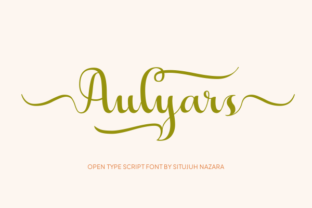
Aulyars is a typeface designed by Situjuh Nazara, a lettering artist and type designer known for work that often blends decorative flair with structured letterforms. The font exists in a space where display characteristics meet functional readability — but with clear stylistic intentions. While exact technical specifications (such as the number of weights or character set) can vary by release, Aulyars is generally understood as a display or semi-display typeface. It is not designed primarily for lengthy body text in small sizes; rather, it excels when used at larger point sizes where its details become visible and impactful.
The letterforms in Aulyars show attention to rhythm and proportion. There is a noticeable contrast between thick and thin strokes in many versions, giving the typeface a refined yet approachable feel. The design avoids being overly rigid, and the curves often carry a hand-drawn quality that suggests a human touch behind the digital construction. This makes Aulyars suitable for projects where a balance between professionalism and personality is desired.
Why Consider Aulyars?
Interest in Aulyars typically arises from a need for a typeface that communicates more than just words. The font carries a visual character that can elevate branding, packaging, or editorial design. Its design language leans toward the contemporary but retains enough classic structuring to avoid feeling trendy in a disposable way.
Several practical reasons might lead someone to evaluate Aulyars:
- Distinctive character: The typeface offers a unique silhouette that avoids blending into the background of commonly used fonts.
- Versatility in display roles: It can work for headlines, logos, posters, and other large-format applications.
- Craftsmanship: The design shows deliberate attention to detail, particularly in how letterforms interact and how negative space is managed.
- Designer reputation: Situjuh Nazara has a track record of producing typefaces with clear conceptual grounding, which can add confidence for buyers or licensees.
Benefits and Strengths of Aulyars
When used in appropriate contexts, Aulyars offers several concrete benefits.
Standout Visual Presence
In a crowded visual landscape, a typeface that can command attention without resorting to gimmicks is valuable. Aulyars achieves this through its proportional contrasts and carefully considered curves. At larger sizes, the font takes on an almost architectural quality, drawing the eye and encouraging closer reading.
Good Fit for Short-Form Content
For headlines, taglines, and short blocks of text, Aulyars performs well. The letterforms remain legible at moderate sizes, and the design does not sacrifice readability entirely for style. This makes it a practical choice for hero sections in web design or cover titles in print.
Supports Brand Personality
If a brand or project aims to convey a sense of crafted quality, sophistication, or understated creativity, Aulyars can support that message visually. The typeface carries a tone that is serious without being cold, and artistic without being inaccessible.
Tradeoffs and Considerations
No typeface is universally suitable, and Aulyars has limitations that are important to weigh before committing to it.
Limited Small-Size Performance
Like many display fonts, Aulyars is not optimized for small text sizes. In body copy, the finer strokes may become too thin to read comfortably, and the overall texture of the typeface can feel uneven. If your project requires extensive reading at 12px or below, Aulyars will likely struggle to deliver a comfortable experience.
Weight and Style Range
Depending on the specific release or version, Aulyars may offer a limited range of weights. This can constrain flexibility when building a typographic hierarchy. If you need a family with multiple weights (e.g., Light, Regular, Bold, Black) for a complex layout, you may need to supplement Aulyars with another typeface or accept the restrictions.
Contextual Compatibility
Aulyars has a strong visual identity. This is a benefit when the font aligns with the project, but it can become a liability if the design direction shifts. Pairing Aulyars with other typefaces requires care; not every sans-serif or serif will harmonize well with its proportions and stroke contrast. Designers should plan for extra time in the pairing and testing phase.
Expectations When Using Aulyars
If you choose to work with Aulyars, setting realistic expectations will help avoid frustration.
- Expect to use it at larger sizes: The font rewards generous sizing. Plan for headlines, pull quotes, or hero text rather than dense paragraphs.
- Expect limited character sets in some versions: As with many independent typefaces, the character coverage may not include every glyph or language you need. Verify the character set against your content requirements before committing.
- Expect a need for careful spacing: The letterforms may require manual kerning or tracking adjustments in certain contexts, especially when used in all-caps or tight layouts.
Where Aulyars Is a Strong Fit
Certain use cases align naturally with Aulyars’ strengths.
- Branding and identity design: For logos, business cards, and brand marks where a unique typographic voice is needed.
- Editorial and magazine layouts: Particularly for cover titles, section headers, and feature openers.
- Packaging design: On product labels or boxes where the typeface needs to convey quality and distinctiveness at a glance.
- Posters and event collateral: Large-format print where the font’s details can be fully appreciated.
- Digital hero sections: In web design, Aulyars can anchor above-the-fold headings effectively when sized appropriately.
When Alternatives May Be Worth Considering
The decision to use Aulyars should also involve an honest assessment of when it might not be the best choice.
Extended Body Text
If your project revolves around long-form reading — articles, reports, books, or documentation — Aulyars is not suitable as a primary text face. In such cases, look toward text-optimized serifs or sans-serifs with proven readability at small sizes. Pair Aulyars as a display accent with a reliable text face like Source Serif, Noto, or IBM Plex.
Budget-Conscious Projects
Independent typefaces vary in cost, and Aulyars may be priced higher than some alternatives, especially if it is licensed for commercial use. If budget constraints are tight, or if you only need a display font for a one-off project, exploring more affordable or open-source options might be practical. Fonts such as Playfair Display, Libre Baskerville, or Raleway could provide similar display qualities without license fees.
Multilingual Requirements
If your content includes languages with extensive diacritics (Vietnamese, Polish, Romanian, etc.) or scripts beyond Latin, check Aulyars’ character coverage carefully. Many display fonts from independent designers do not support full Latin Extended-A or beyond. Alternatives like Noto Sans Display or Source Sans provide broader language support.
Web Performance Constraints
If Aulyars is used as a web font and the file size is large (due to a high number of glyphs or complex outlines), page load times may be affected. In performance-sensitive projects, consider whether the visual benefit outweighs the potential impact, or whether a subset of the font can be used.
Practical Decision-Making Insights
To determine whether Aulyars aligns with your goals, take a structured approach in your evaluation.
- Define the role of typography in your project. Is the typeface meant to lead the visual identity, or to play a supporting role? If it leads, Aulyars can be a strong candidate. If it supports, consider whether its distinctiveness might distract.
- Test at intended sizes. Always test Aulyars at the exact sizes and on the mediums you plan to use. Print a sample at actual size, or set up a live web test with real content. Nothing reveals a typeface’s suitability faster than seeing it in context.
- Assess the character set. Obtain a character map or check the font specimen for language support. This step is often overlooked until late in a project, causing costly redesigns.
- Plan for pairing. If you need a second typeface for body text or subheadings, identify candidates in advance. Aulyars pairs best with neutral, low-contrast typefaces that do not compete for attention. Sans-serifs with moderate proportions often work well.
- Compare with alternatives. Create a short list of comparable display typefaces — both paid and open-source — and compare them side by side with Aulyars. Evaluate not only aesthetics but also practical factors like file size, weight range, and license terms.
- Consider long-term use. If this is for a brand or recurring publication, will Aulyars still feel appropriate a year or two from now? Avoid choosing a typeface purely for its novelty if your project requires longevity.
Final Considerations for Your Decision
Aulyars is a thoughtfully designed typeface with a clear point of view. It offers genuine value for designers who need a display font with personality, craft, and a contemporary yet grounded aesthetic. However, its limitations in small-size readability, weight range, and language support mean it is not a one-size-fits-all solution.
The best use of Aulyars comes from recognizing its strengths and working within them — using it as a deliberate accent rather than a universal workhorse. For projects that demand a distinctive typographic voice in headlines, branding, or editorial settings, Aulyars can be an excellent choice. For projects that revolve around extended text, broad language coverage, or tight budgets, exploring alternatives is a sensible part of the evaluation process.
Ultimately, deciding whether Aulyars aligns with your needs comes down to testing it in your specific context. With careful placement and thoughtful pairing, the font can elevate a design significantly. With mismatched expectations, it can become a source of friction. By understanding both its promise and its constraints, you can make an informed decision that serves your project well.