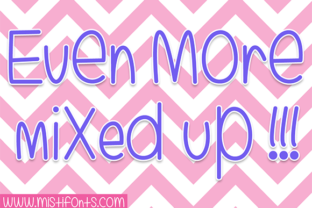
Even More Mixed Up: A Playful Font That Works Hard for Creators, Marketers, and Small Business Owners
You have probably scrolled past hundreds of fonts this week alone. Some look too serious. Others feel childish or incomplete. Then you land on something that stops you mid-scroll because it manages to feel chaotic and deliberate at the same time. That is Even More Mixed Up. It is a mixed font that combines mismatched letterforms, varying weights, and unexpected shapes into one cohesive style. It looks like someone picked letters from different alphabet sets and arranged them into something oddly charming. And that is exactly why it works.
This is not a font you use for a corporate memo or a legal document. But for projects that need personality, warmth, or a handmade feel, Even More Mixed Up delivers something most standard typefaces cannot: character. Let us walk through where this font fits into real projects, who actually benefits from it, and what you should keep in mind before you add it to your toolkit.
What Even More Mixed Up Actually Brings to Your Projects
At its core, Even More Mixed Up is a display font. That means it is designed for headlines, short text blocks, and visual emphasis rather than long paragraphs. The mixed nature of the font means each letter may look different from the next. One character might be bold and blocky while another curves gently. Some letters sit slightly above or below the baseline. That unevenness is not a flaw. It is the point.
When you use this font, you are signaling that the project is creative, informal, or handcrafted. It works well in contexts where perfection feels cold and imperfection feels human. Think about a greeting card, a poster for a community event, or a label on a small-batch product. Those are places where Even More Mixed Up shines because it mirrors the unpredictability of real life.
One thing to note early: this is not a font for body text. You would not set a blog post or a product description in Even More Mixed Up. But for a title, a pull quote, or a short call-to-action, it grabs attention immediately. That distinction matters when you are deciding how to use it effectively.
Where Creators and Designers Get the Most Out of It
If you are a graphic designer, a social media content creator, or someone who makes digital assets for clients, Even More Mixed Up gives you a quick way to add a handmade aesthetic without actually drawing anything by hand. That saves time. You can pair it with a clean sans-serif font for contrast. The mixed letters become the visual hook, and the simple font carries the supporting information.
For example, imagine you are designing an Instagram story for a local bakery. The headline reads "Fresh Baked Today" in Even More Mixed Up, and below it, a simple serif font lists the flavours. The mixed font adds warmth. It makes the bakery feel approachable and small-batch, even if the shop sells hundreds of loaves a day. That emotional shortcut is valuable in marketing.
You can also use Even More Mixed Up in video titles, YouTube thumbnails, and presentation slides. In those formats, the font needs to be readable at a glance but also interesting enough to stop someone from scrolling past. The irregular letter shapes do exactly that. Viewers may not consciously notice the font, but they will feel the difference between a generic title and one that looks intentionally playful.
Freelancers and hobbyists often worry that a mixed font like this only works in narrow contexts. But the truth is, because it is so distinctive, it can anchor an entire visual identity if used consistently. A few creators I know use Even More Mixed Up in their logo, their social media templates, and even their email headers. The key is keeping everything else minimal so the font stays the star.
Practical Uses for Small Business Owners and Entrepreneurs
Small business owners are always balancing professionalism with personality. You want to be taken seriously, but you also need to stand out in a crowded market. Even More Mixed Up helps with that balance when used strategically.
Consider product packaging. If you sell handmade soap, candles, or ceramics, your label needs to communicate that the product is crafted, not mass-produced. A standard Helvetica label can feel sterile. A label using Even More Mixed Up for the product name feels personal. Customers often keep packaging that looks charming, and that leads to word-of-mouth marketing. One candle maker I worked with used the font for their seasonal collection names. Customers posted photos of the packaging on social media unprompted. That kind of organic exposure does not happen with generic design.
Marketers and brand strategists can use Even More Mixed Up in landing page headers, promotional banners, and limited-time offers. Because the font feels temporary and playful, it suits short-term campaigns well. A "Summer Sale" header in Even More Mixed Up implies fun and urgency. The same header in a corporate font might feel forced or flat.
Restaurants, cafes, and food trucks also benefit. Menu boards, specials signs, and takeaway stickers all look better when the typography matches the vibe of the food. A taco truck with a playful mixed font feels authentic. A fine dining restaurant might skip it, but for most casual or creative food businesses, it is a natural fit.
Educators, Bloggers, and Content Creators Can Use It Too
Teachers and educators often need to create materials that engage students without looking childish. Even More Mixed Up works well for worksheet titles, classroom posters, and digital lesson headers. The uneven letters grab attention without being distracting. A history teacher might use it for a project title like "Ancient Civilizations" to make the assignment feel less intimidating. A music teacher could use it for a concert poster. The font adds enthusiasm without needing images or illustrations.
Bloggers and publishers, especially those covering lifestyle, DIY, parenting, or creative topics, can use Even More Mixed Up to separate their brand from the thousands of similar blogs using identical templates. A DIY blog with a "Weekend Project" header in a mixed font immediately tells readers that the content is approachable and fun. It sets expectations before a single word is read. That matters because first impressions happen fast online.
Even newsletter creators can benefit. Using Even More Mixed Up for the newsletter name or section headers inside the email adds a tactile feel to digital communication. Subscribers may not articulate why they like the design, but they will notice that it feels different from the other emails in their inbox. That subtle distinction can improve open rates and engagement over time.
What to Consider Before You Download or Buy It
Before you commit to Even More Mixed Up for a project, there are a few practical considerations worth keeping in mind. First, test the font at different sizes. Some mixed fonts look great at large display sizes but become hard to read when scaled down. Make sure it works for your specific use case, especially if you plan to use it on product labels or small printed items.
Second, consider the licensing terms. If you plan to use the font commercially, such as on products you sell or in client projects, check whether the license covers that. Some mixed fonts from indie designers require an extended license for commercial use. That is usually a small additional cost, but it is better to know upfront than to deal with issues later.
Third, think about pairing. Even More Mixed Up works best when it is supported by a simple, readable font. You want contrast, not competition. A clean sans-serif like Open Sans, Lato, or Montserrat is usually a safe choice. The goal is to let the mixed font do the heavy lifting for personality while the supporting font handles readability.
Fourth, test legibility on different backgrounds. Mixed fonts with varying thickness sometimes get lost on busy backgrounds. If you are designing a poster or a web banner, place the font over a solid or lightly textured background. That ensures the irregular letterforms remain readable. Dark backgrounds with light text can work well if the font has enough weight.
Finally, use it intentionally. Because Even More Mixed Up is so distinctive, using it too much in a single project can feel messy. Reserve it for headlines, emphasis, or short phrases. Let it be the accent piece in your design, not the entire composition. That restraint is what separates a polished project from a chaotic one.
Final Thoughts on Making It Work for You
Even More Mixed Up is not a font for every job. But when the job calls for warmth, personality, and a human touch, it performs better than most alternatives. Whether you are designing a logo for a side hustle, creating content for a growing blog, or packaging products for a small batch release, this font helps you communicate that the work was made with care.
The best tools are the ones that feel natural in your hands. If you experiment with Even More Mixed Up and it fits your style, lean into it. Use it across projects. Let it become part of your visual vocabulary. And if it does not work for a particular project, set it aside and come back next time. That flexibility is what every creator, marketer, and small business owner needs. Keep experimenting, keep making, and let the imperfect letters remind you that polished is not always better.