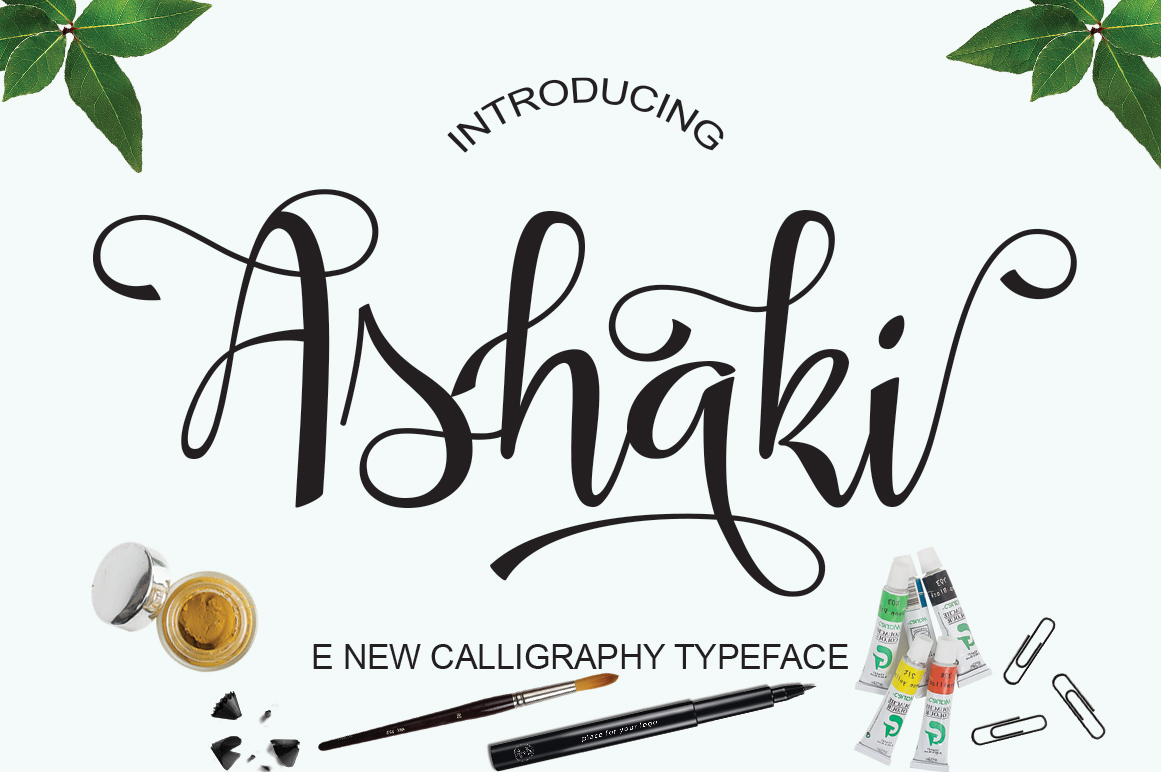
Asyaki: A Stunning Handwritten Font by Naqsya.Co That Brings Personality to Every Letter
Fonts are more than just letters on a screen. They carry tone, mood, and identity. In a world where digital communication often feels cold and uniform, handwritten fonts offer something different—warmth, individuality, and a human touch. Asyaki, a stunning handwritten font created by Naqsya.Co, stands out in this crowded space. It doesn't just replicate handwriting; it elevates it into something refined, expressive, and versatile.
Before diving into the details, it helps to understand what makes Asyaki different from the thousands of other handwritten typefaces available today. The answer lies in its balance between spontaneity and structure. While many handwritten fonts lean too far into messy or overly polished territory, Asyaki finds a sweet spot. It feels natural without being sloppy, elegant without being stiff. That balance is harder to achieve than it sounds, and it's exactly why designers keep coming back to it.
The Design Philosophy Behind Asyaki
Every font tells a story. Asyaki was born from a desire to capture the fluidity of real handwriting while maintaining readability across different contexts. Naqsya.Co, the studio behind it, focused on creating a typeface that feels both personal and professional. The strokes have a natural rhythm, with slight variations in weight and slant that mimic how a pen moves across paper.
One of the first things you notice about Asyaki is its consistency. The letterforms are carefully crafted so that each character sits well with its neighbors. There are no awkward gaps or sudden shifts in thickness. This makes it suitable for longer text blocks, not just short headlines. Many handwritten fonts fall apart when used for more than a few words, but Asyaki holds up. The spacing is generous enough to avoid crowding but tight enough to keep the flow intact.
Another notable quality is the contrast between thick and thin strokes. This gives the font a dynamic, almost calligraphic feel. It's not a full-on script with dramatic flourishes, but it has enough variation to keep the eye engaged. For designers looking for something that feels handcrafted but not overly ornate, Asyaki hits the mark.
Where Asyaki Shines: Use Cases and Applications
Handwritten fonts often get pigeonholed into specific niches—wedding invitations, greeting cards, or casual social media posts. Asyaki breaks out of that mold. Its versatility makes it useful across a wide range of projects, and that's one of its strongest selling points.
Branding and Logo Design
Brands that want to convey approachability, creativity, or authenticity often turn to handwritten typography. Asyaki works particularly well for small businesses, lifestyle brands, and creative agencies. The font adds a personal touch without sacrificing professionalism. A logo set in Asyaki feels like it was signed by hand, which builds trust and familiarity. It's especially effective for businesses in the fashion, beauty, food, and wellness industries—any sector where human connection matters.
Social Media and Digital Content
Social media feeds are saturated with content. Standing out requires more than just good images; the typography needs to grab attention too. Asyaki works beautifully for Instagram stories, quote graphics, and promotional posts. Its natural flow pairs well with both photos and illustrations. Because it's highly legible even at smaller sizes, it works on mobile screens without losing its charm. Hashtags, captions, and short headlines all benefit from the warmth Asyaki brings.
Print Materials and Stationery
Print is where handwritten fonts truly come to life. Asyaki excels in invitations, thank-you cards, menus, and product packaging. The tactile nature of print combined with the hand-drawn quality of the font creates an experience that feels personal and intentional. Wedding stationery, in particular, benefits from Asyaki's romantic yet understated tone. It doesn't scream for attention—it invites the reader in.
Editorial and Blog Design
Long-form content doesn't have to be boring. Asyaki can be used for pull quotes, section headers, or introductory paragraphs in blogs and magazines. When paired with a clean sans-serif body font, it creates a nice contrast that guides the reader through the content. It adds personality without compromising readability, which is a rare combination in handwritten typefaces.
Practical Considerations for Using Asyaki
Choosing a font is about more than just looks. There are practical factors that determine whether a typeface will work for a given project. Asyaki holds up well under scrutiny, but there are a few things worth keeping in mind.
File Formats and Licensing
Asyaki is typically available in common formats like OTF, TTF, and WOFF, which means it works across desktop and web applications. For print designers, the OTF format offers the best support for advanced typographic features. Web designers will appreciate the WOFF version, which is optimized for fast loading. Licensing terms vary depending on where you purchase the font, but Naqsya.Co generally offers both personal and commercial licenses. Always check the specific terms before using Asyaki in a client project or commercial product.
Language Support and Character Set
One limitation of many handwritten fonts is limited language support. Asyaki includes a solid range of Latin characters, covering most Western European languages. It also includes standard punctuation, numbers, and some special characters. If your project requires support for Cyrillic, Greek, or other non-Latin scripts, Asyaki may not be the right choice. However, for English, French, Spanish, German, and similar languages, it's more than sufficient.
Pairing Asyaki with Other Fonts
No font works in isolation. Asyaki pairs best with clean, minimal typefaces that don't compete for attention. Good options include geometric sans-serifs like Montserrat, neutral serifs like Lora, or humanist fonts like Source Sans Pro. The key is to let Asyaki be the star. Use it for headlines or accents, and let a simpler font handle the body text. This creates a clear hierarchy and prevents visual clutter.
- Good pairings: Montserrat, Lora, Source Sans Pro, Open Sans, Raleway
- Avoid pairing with: Other script fonts, overly decorative serifs, or heavy slab serifs
Size and Legibility
Asyaki works best at medium to large sizes. For body text, stick to 12pt or larger in print, and 16px or larger on the web. At very small sizes, the subtle stroke variations can become less distinct, and readability may suffer. For logos, headlines, and display uses, any size above 24pt in print will showcase its full character. If you're using it on a website, test it across devices to make sure it reads well on both desktop and mobile.
What Sets Asyaki Apart from Other Handwritten Fonts
There is no shortage of handwritten fonts available online. Some are free, some are premium, and many are forgettable. Asyaki distinguishes itself through craftsmanship and attention to detail. The ligatures are well-placed, the kerning is consistent, and the overall impression is one of deliberate design. It doesn't feel like a digitized scribble—it feels like a carefully considered typeface that just happens to look hand-drawn.
Another differentiator is the emotional quality of the font. Asyaki manages to be both warm and refined. It doesn't lean too far into casual territory, which makes it suitable for professional work. At the same time, it avoids the coldness of many polished scripts. That emotional middle ground is hard to achieve, and it's what makes Asyaki a go-to choice for designers who want their work to feel human.
How to Get the Most Out of Asyaki
Using a handwritten font effectively requires a bit of restraint. Here are some practical recommendations for making Asyaki work in your projects.
- Use it sparingly. Let Asyaki handle the headlines or key phrases, and use a neutral font for everything else. Too much handwritten text can tire the eye.
- Pair it with white space. Handwritten fonts need room to breathe. Give Asyaki plenty of margin around it, especially in print layouts. This enhances its elegance and improves legibility.
- Consider color. Asyaki works well in dark tones on light backgrounds, but it also shines in accent colors like warm reds, deep greens, or soft pastels. Experiment with color to match the mood of your project.
- Test at different sizes. Before committing to Asyaki for a full layout, test it at various sizes to see how it behaves. This is especially important for web projects where responsive scaling can change the appearance of a font.
- Check the spacing. While Asyaki has good default kerning, some adjustments may be needed depending on the medium. In large display sizes, a little extra tracking can improve readability. In small sizes, tighter spacing may help the letters hold together.
Who Should Use Asyaki
This font is not for every project, and that's a strength. Asyaki is best suited for designers, brand managers, and content creators who value authenticity and want their work to feel personal. If you are working on a project where human connection is important—whether it's a brand identity, a wedding invitation, or a social media campaign—Asyaki can help communicate that.
It is also a strong choice for freelancers and small agencies that need a versatile typeface without building an entire font library. One well-chosen handwritten font can serve many purposes, and Asyaki's range makes it a smart investment. For larger teams, it works well as part of a broader typographic system, adding warmth to an otherwise neutral palette.
Final Thoughts on Asyaki
Asyaki by Naqsya.Co is a reminder that good typography is about more than just legibility. It's about feeling. The font brings a human quality to digital and print work that is increasingly rare in a world of automated design. Its balance of structure and spontaneity, its versatility across mediums, and its emotional warmth make it a valuable addition to any designer's toolkit.
Whether you are building a brand, designing a wedding suite, or simply looking for a font that adds personality to your content, Asyaki deserves a close look. It delivers on the promise of a stunning handwritten font—not just in appearance, but in performance. And in a landscape where typography often feels interchangeable, that kind of distinction matters.