Rowdy: A Handwritten Marker Font That Brings Authenticity to Modern Design
In a digital landscape dominated by sleek sans-serifs and polished serifs, it can be surprisingly difficult to find a typeface that feels genuinely human. Many designers and content creators face a recurring challenge: how do you inject warmth, personality, and a handcrafted feel into a project without sacrificing readability or professionalism? If you have ever struggled with fonts that feel too sterile for a friendly brand, too rigid for an informal poster, or too generic for a creative campaign, you are not alone. This is where Rowdy—a modern handwritten marker font created by the madeDeduk foundry—enters the picture as a practical and versatile solution.
The Challenge of Finding Personality in Digital Typography
Typography is one of the most powerful tools in your design toolkit. The right font can communicate mood, values, and even a sense of trust. Yet many available handwritten fonts fall into one of two traps: they either look overly polished and lose the raw, casual energy of real handwriting, or they become so messy that they undermine readability. The problem is especially acute for entrepreneurs, small business owners, and marketing professionals who need their materials to stand out while remaining clear and approachable.
Imagine you are designing a website for a local coffee shop, a poster for a music festival, or packaging for an artisanal product. You want the text to feel inviting, spontaneous, and real. But you also need your audience to actually read it—quickly and without confusion. The tension between authenticity and legibility is real, and it is one of the most common typography struggles professionals face today.
This is the gap that Rowdy fills. It is a font that deliberately embraces the marker-drawn aesthetic while maintaining the structural discipline needed for practical everyday use. Rather than forcing you to choose between personality and clarity, it helps you achieve both.
What Makes Rowdy a Practical Choice for Designers and Creators
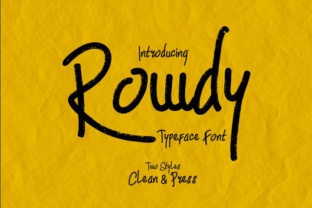
At its core, Rowdy is a modern handwritten marker font that mimics the look and feel of a bold marker pen on paper. But what sets it apart from countless other handwriting fonts is its balance of character and control. The letterforms are energetic without being chaotic, and the overall impression is one of confident spontaneity. This makes Rowdy particularly useful in situations where you want your text to feel immediate and human, yet still polished enough for professional contexts.
For anyone who has tried to use a generic handwriting font only to discover it looks cartoonish or amateurish in a real layout, Rowdy offers a more refined alternative. It carries the warmth of hand-drawn lettering but with consistent stroke weights and clear shapes that help it hold up at various sizes. Whether you are using it in a headline, a short block of text, or a logo, it delivers that desirable handcrafted feel without the typical downsides.
How Rowdy Addresses Real-World Typography Challenges
Let us look at some of the specific challenges that Rowdy helps solve:
Adding Warmth to Digital and Print Materials
Digital interfaces can feel cold. Even the most carefully designed website or social media graphic can lack a sense of human touch. Rowdy introduces a marker-drawn texture that softens the digital edge. When used in headlines, pull quotes, or accent text, it signals to the reader that there is a person behind the message. For small business owners, this can be a powerful way to build connection and trust with an audience that is increasingly skeptical of overly polished corporate messaging.
Creating Visual Hierarchy Without Extra Effort
A common design need is to differentiate elements without cluttering the page. Rowdy’s bold, marker-like strokes naturally draw the eye, making it an excellent choice for headings and callouts. Pair it with a clean sans-serif body font, and you have an instant visual hierarchy that guides readers through your content. This simplicity is a major time-saver for non-designers who need results quickly.
Maintaining Legibility in Informal Contexts
Handwritten fonts often fail when scaled down or used in longer passages. Rowdy’s letterforms are designed to stay readable even at smaller sizes, which is not always true of fonts that try to replicate messy handwriting. For example, if you are creating a menu, a flyer, or a social media caption graphic, Rowdy holds its clarity while still looking relaxed and approachable. This is a significant practical advantage for anyone who needs versatility from a single typeface.
Practical Applications for Rowdy Across Different Media
One of the strongest arguments for adding Rowdy to your font library is its versatility. Here are some of the most effective ways different users can put it to work:
- Branding and Logos: For businesses that want to project a friendly, artisanal, or creative identity, Rowdy can serve as a logo typeface or as part of a wordmark. Its handcrafted feel works well for cafes, bakeries, boutiques, creative agencies, and personal brands.
- Posters and Flyers: Whether for a community event, a concert, or a product launch, Rowdy brings energy and immediacy to large-format print. Its bold weight ensures visibility from a distance.
- Social Media Graphics: In a crowded feed, text needs to stop the scroll. Rowdy’s marker aesthetic adds a relatable, human element that contrasts nicely with stock photography and templated layouts.
- Packaging and Labels: Handwritten typography often appears on craft products, natural goods, and specialty foods. Rowdy delivers that look without requiring a custom hand-lettering commission, which saves both time and budget.
- Web Headlines and Hero Sections: Used sparingly in digital design, Rowdy can add personality to hero headers, blog titles, or call-to-action text. It pairs well with neutral background colors and minimalist layouts.
For each of these applications, the outcome is the same: your content feels more approachable and distinctive. Users are more likely to engage with text that looks like it was written by a person rather than generated by a machine.
Who Benefits Most from Rowdy’s Style
Different users will find different value in Rowdy, depending on their goals and workflow:
Freelance designers and creative entrepreneurs often need fonts that can do double duty. Rowdy works as both a display font and a supporting actor in layouts, which means you can invest in one typeface and get multiple use cases. For someone building a brand kit on a budget, this is a smart, practical choice.
Small business owners and marketers who handle their own content creation will appreciate how easy Rowdy is to implement. It does not require advanced design skills to look good. Simply pairing it with a neutral background and a clean secondary font can elevate the overall look of business cards, menus, or social posts.
Educators and nonprofit organizers who need to create materials that feel welcoming and inclusive will find Rowdy useful for posters, newsletters, and handouts. Its friendly tone helps break down barriers and makes information feel more accessible.
Hobbyists and DIY creators working on personal projects—such as invitations, scrapbooks, or digital art—can use Rowdy to add a professional-looking handcrafted element without needing to master hand lettering.
Each of these users approaches typography with different needs, but they all share a common goal: they want their text to communicate warmth and clarity simultaneously. Rowdy helps them get there with less trial and error.
Making the Most of Rowdy in Your Projects
To get the best results from Rowdy, consider a few practical recommendations:
- Pair it with a neutral sans-serif. Fonts like Open Sans, Lato, or Roboto create a clean backdrop that lets Rowdy’s personality shine without competing for attention.
- Use it for short, impactful text. Rowdy is most effective in headlines, subheadings, quotes, and short phrases. For long body copy, stick to a more traditional typeface to maintain readability.
- Play with scale. Because of its marker-drawn character, Rowdy looks striking when scaled up. Experiment with large sizes to emphasize key messages.
- Consider color and texture. On colored backgrounds or textured paper, Rowdy’s marker aesthetic becomes even more pronounced. This can add depth to both digital and print designs.
- Test it in context. Before committing to a full layout, try Rowdy in the actual medium you plan to use—whether that is a screen mockup or a print proof. Its legibility at various sizes makes it accommodating, but every project benefits from a real-world check.
These recommendations are not rigid rules. Part of Rowdy’s value is how forgiving and flexible it is. Feel free to experiment until the font aligns with your specific tone and message.
Final Considerations for Using Rowdy Effectively
When evaluating any typeface for your work, the most important question is whether it helps you communicate your message more effectively. Rowdy answers that question affirmatively for anyone who needs a font that bridges the gap between handcrafted charm and practical utility. It is not a novelty font reserved for occasional use—it is a workhorse that can carry the visual weight of branding, marketing, and content projects across multiple formats.
If you are tired of searching for a handwritten font that looks genuine without looking sloppy, and professional without feeling stiff, Rowdy is worth serious consideration. It delivers the personality that audiences respond to, while respecting the design constraints that professionals rely on. Whether you are launching a new brand, refreshing an existing one, or simply looking for a font that adds a human touch to your next project, Rowdy gives you a straightforward way to achieve that goal.
Ultimately, the best font is the one that solves a real problem for you. For many creators, the problem is finding a modern handwritten marker font that feels authentic, remains readable, and works across diverse applications. Rowdy, from the madeDeduk foundry, addresses exactly that need. It helps you create content that looks and feels genuinely human—and in a world full of digital sameness, that is a significant advantage.