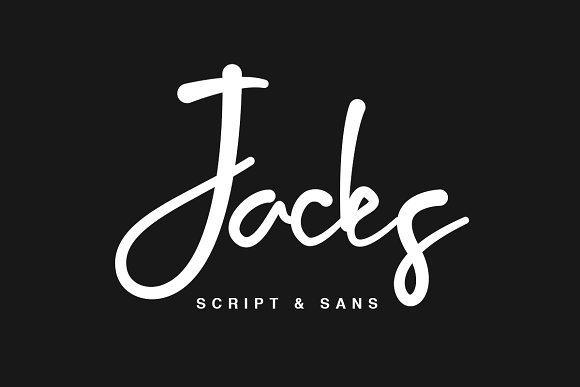
Jacks: Where Handwritten Charm Meets Sans Serif Clarity
Typography has a quiet power. It sets the mood, establishes trust, and communicates personality before a single word is fully read. Jacks, a fluid font duo, understands this dynamic intimately. Comprising Jack Script, a warm handwritten font, and Jack Sans, a clean contemporary counterpart, this pair offers more than just letters—it provides a toolkit for storytelling across mediums. Whether you are designing a brand identity, crafting social media graphics, or laying out a publication, Jacks invites you to explore the balance between human touch and modern structure.
The Unique Character of a Font Duo
What makes Jacks stand out in a crowded field of typefaces is its deliberate duality. Jack Script brings the organic flow of hand lettering—slight irregularities, gentle curves, and a sense of personal expression. It is not overly decorative or hard to read; instead, it feels approachable and sincere. Jack Sans, on the other hand, provides a stable, legible foundation. Its clean lines and neutral weight make it an excellent choice for body text, captions, or any element that needs to recede gracefully into the background.
Together, they form a cohesive system. The key is contrast: the script injects warmth and emotion, while the sans offers clarity and order. This interplay is what makes Jacks versatile. You are not limited to one voice. You can lead with the script for headlines that grab attention, then switch to the sans for supporting information that remains easy to digest. The result is a visual rhythm that guides the reader naturally.
Creative Applications Across Platforms
One of the most practical strengths of Jacks is how it adapts to different formats. For social media, where engagement depends on stopping the scroll, Jack Script can be used for bold quotes or product names. Pair it with Jack Sans for a caption or call-to-action to maintain readability on mobile screens. The handwritten element adds a human touch that resonates with audiences tired of sterile corporate visuals.
In editorial design—think newsletters, blogs, or digital magazines—the duo shines when used to create clear hierarchies. A blog post header set in Jack Script immediately signals a personal or thoughtful piece, while the body text in Jack Sans ensures comfort during longer reading sessions. This combination works especially well for lifestyle, travel, or creative industry content, where personality and professionalism must coexist.
For branding and identity work, Jacks offers flexibility. A small business owner developing a logo can use Jack Script for the primary mark—perhaps a cafe name or a boutique label—and then carry Jack Sans into the website, menus, and business cards. The consistency across touchpoints builds recognition without being monotonous. Because the two fonts share underlying structural compatibility, mixing them feels intentional rather than chaotic.
Adapting Jacks for Different Audiences
Different users will naturally emphasize different aspects of the duo. A designer working on a wedding invitation suite might lean heavily on Jack Script, using it for the couple’s names and key details, with Jack Sans reserved for logistical information like dates and locations. The handwritten quality evokes intimacy, while the sans ensures clarity for essential details. An educator creating course materials could reverse that focus: Jack Sans for the bulk of the content to support legibility, with Jack Script used sparingly for section headings or motivational quotes.
Marketers and entrepreneurs can use Jacks to reinforce brand voice. If your brand is approachable and friendly, lead with the script. If you need to convey expertise and reliability, let the sans take a larger role. The duo allows you to shift the balance without changing typefaces entirely. This is especially useful when you are targeting multiple segments—for instance, using a more script-heavy approach for a younger audience on Instagram, and a more structured sans layout for a professional LinkedIn article. The same fonts, different emphasis.
Practical Tips for Combining Script and Sans
Making a font duo work requires more than just picking two typefaces. Here are grounded recommendations to keep your results clear, effective, and audience-friendly:
- Use size and weight to create hierarchy. Jack Script often works best at larger sizes—headlines, subheads, or pull quotes. At smaller sizes, its handwritten details can blur. Jack Sans is your choice for body text, captions, and smaller labels. A simple rule: script for impact, sans for information.
- Limit script usage to short phrases. Long strings of handwritten text can become tiring to read. Reserve Jack Script for key lines—the name of your product, a single bold statement, or a signature element. For longer narratives, rely on Jack Sans. This keeps the script special and preserves readability.
- Maintain consistent spacing and alignment. Handwritten fonts often have uneven letter spacing. Review your kerning, especially in logos or headlines. Jack Sans allows for tighter or looser tracking depending on the context. Adjusting letter spacing between the two fonts helps them feel like part of the same family.
- Consider color and background. Jack Script pairs well with textured or warm-toned backgrounds—think paper, wood, or muted gradients. Jack Sans works on almost any surface but is especially effective on clean white or dark mode interfaces. Test contrast to ensure the script remains visible without strain.
- Test across devices. What works in a design mockup may shift on a phone or tablet. Jack Sans typically renders reliably, but script fonts can appear thinner on some screens. Check that your chosen sizes hold up in web and print formats.
Project Ideas to Unlock the Full Potential
Sometimes the best way to understand a tool is to build something with it. Here are practical projects where Jacks can be the primary driver of visual identity:
- Personal Branding Kit. Create a one-page brand board for yourself or a client. Use Jack Script for the tagline or name, and Jack Sans for a mission statement and contact details. This exercise clarifies how the duo communicates personality and professionalism side by side.
- Social Media Templates. Design a set of quote cards or announcement templates. Use Jack Script for the headline quote and Jack Sans for the attribution or caption. These templates can be reused with different colors or images, maintaining consistency without looking repetitive.
- Product Packaging Mockup. Whether it’s a candle label, a coffee bag, or a skincare bottle, try applying Jack Script to the product name and Jack Sans to ingredients or instructions. The contrast helps the product stand out on a shelf while keeping necessary info legible.
- Digital Magazine Layout. Design a two-page spread for a mock article. Lead with a Jack Script title, drop caps or initial letters in the script style, and set the body in Jack Sans. Use subheads in small caps or bold sans to create a clear reading path.
- Email Newsletter Header. Many newsletters rely on plain text. Insert a header image or styled text element using Jack Script for the newsletter name and Jack Sans for the issue number or date. This small touch adds a crafted feel to routine emails.
Keeping Results Clear and Audience-Friendly
Typographic choices ripple through how an audience perceives your work. With Jacks, the goal is not to dazzle but to communicate effectively. Always ask: What does my audience need from this content? If they need quick information, prioritize Jack Sans. If they need emotional connection, let Jack Script take a lead role. The duo is flexible enough to serve both ends without breaking the visual system.
Consistency also matters. Once you establish a pattern—script for primary headers, sans for everything else—stick to it across pages, posts, or products. Your audience will subconsciously learn the hierarchy, making your content feel organized and trustworthy. If you must break the pattern, do it intentionally, perhaps by inverting the roles for a special section or a callout box.
Finally, trust your instincts. Jacks was designed as a fluid pair because real creative work is rarely rigid. You might find that for certain projects, you use only Jack Sans or only Jack Script—that is fine. The duo exists to give you options, not to impose rules. The most effective typography is the kind that disappears into the reading experience while subtly reinforcing the message.
Practical Inspiration from Real Contexts
Imagine a freelancer’s portfolio site. The homepage greeting uses Jack Script: “Hi, I’m Alex.” Below, Jack Sans describes services and past work. The script gives a first impression of approachability, while the sans builds credibility through clarity. Or consider a small bakery’s menu board. Jack Script highlights the daily specials—“Sourdough Today”—and Jack Sans lists prices and descriptions. The handwritten style echoes the artisan nature of the food, and the sans ensures customers can quickly find what they need.
For educators, think of a workshop slide deck. Jack Script on the title slide creates a warm invitation. Throughout the deck, Jack Sans for bullet points and data keeps the learning material clean. The shift between fonts mirrors the shift between welcoming tone and informational depth. Even in workbook PDFs, using Jack Script for exercise prompts and Jack Sans for answer fields can make the material feel more engaging and less formal.
These examples show that Jacks thrives not because it is flashy, but because it is grounded. It respects the reader’s need for ease while offering the creator a way to infuse personality. Whether you are a blogger refining your newsletter, a marketer building campaign assets, or an entrepreneur shaping your brand from scratch, this font duo gives you a simple, effective structure to build upon.
Final Thoughts on Working with Jacks
The best tools are those that expand your options without complicating your process. Jacks does exactly that. By offering two complementary voices in one system, it allows you to adjust tone, emphasis, and readability without juggling unrelated typefaces. The script brings humanity; the sans brings structure. Together, they form a practical foundation for any project that requires both warmth and professionalism.
Start small. Experiment with a single headline and its supporting text. See how the interaction feels on your chosen medium. Adjust sizes, spacing, and color until the relationship between script and sans feels natural. Over time, you will develop an intuitive sense of when to lead with one and support with the other. That intuition, combined with the built-in harmony of Jacks, is what turns ordinary typography into effective communication.