Klasic Script: A Strategic Tool for Distinctive Visual Communication
Choosing a typeface is rarely a neutral decision. Every font carries weight, history, and emotional resonance that shapes how your audience interprets your message. In a landscape saturated with clean sans-serifs and predictable system fonts, a well-chosen script can cut through noise without saying a word. Klasic Script is one such option—a handmade script font rooted in vintage calligraphy but calibrated for contemporary use. Its thick, attention-grabbing strokes make it more than just decorative; it is a deliberate instrument for branding, positioning, and memorable communication.
Understanding what Klasic Script offers—and where its use is appropriate—requires looking beyond aesthetics. This article walks through the strategic value of this typeface, how to integrate it into your work intentionally, and what to consider before making it part of your toolkit.
What Klasic Script Brings to the Table
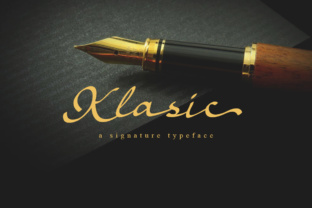
Klasic Script is not a subtle font. Its bold, flowing letterforms evoke the feel of hand-drawn calligraphy while maintaining enough structure to remain legible in display contexts. The strokes are thick, the curves deliberate, and the overall impression is one of confidence and warmth. This makes it particularly useful for applications where you need to capture attention quickly—logos, headlines, packaging, social media graphics, and signature-style elements.
From a strategic standpoint, Klasic Script offers three distinct advantages:
- Differentiation – In a world of templated design, a handmade aesthetic signals authenticity and care. It tells your audience that you invested time in crafting your identity.
- Emotional resonance – Script fonts naturally evoke personality, elegance, or nostalgia depending on context. Klasic Script leans toward approachable sophistication, which can humanize a brand or project.
- Memorability – The weight and character of the letterforms make them stick. When someone sees your logo or headline, they are more likely to recall it later—a crucial factor in crowded markets.
These qualities are not automatic, however. They depend entirely on how and where you deploy the font. Strategic use requires intent.
Aligning Typeface Choices with Goals and Positioning
Every design decision should serve a purpose. Before reaching for Klasic Script, ask yourself what outcome you are trying to achieve. Are you building a brand from scratch? Refreshing an existing identity? Creating a one-off campaign that needs to stand out? The answers will determine whether a bold script is the right tool.
For entrepreneurs and small business owners, positioning is everything. If your brand aims to convey heritage, craftsmanship, or personal service, Klasic Script can reinforce that message. A handcrafted font pairs naturally with artisanal products, boutique services, creative studios, and personal brands where the founder’s name is front and center. In these contexts, the font acts as a visual shorthand for the values you want to communicate.
For marketers and content creators, the font can support campaign goals by adding visual contrast. If your typical materials rely on clean, minimal layouts, introducing Klasic Script for key headlines or call-to-action phrases can create a focal point that draws the eye. It works well as an accent—used sparingly to highlight what matters most.
In operational terms, consistency matters. If you decide to use Klasic Script for your logo, ensure that your supporting materials (business cards, website headers, email signatures) echo the same visual language. This reinforces recognition and builds trust over time.
When to Use Klasic Script: Practical Scenarios
Knowing when to deploy a highly distinctive font is just as important as knowing how. Here are several realistic use cases where Klasic Script adds measurable value:
- Logo and wordmark design – Especially for personal brands, creative agencies, wedding planners, photographers, or specialty food and beverage businesses. The script lends a bespoke, handcrafted feel that signals uniqueness.
- Social media headers and quotes – In feeds where users scroll quickly, bold typography stops thumbs. Using Klasic Script for quote cards or announcement graphics can increase engagement by making content stand out.
- Product packaging and labels – Whether for candles, journals, teas, or small-batch products, a script font suggests care and quality. It can elevate perceived value without a premium production budget.
- Signage and display materials – Posters, banners, signage, and event collateral benefit from type that commands attention. Klasic Script works well at larger sizes where its details are visible.
- Email headers and newsletter branding – A consistent visual identity across email builds recognition. Using the font in your email header or as a signature style can reinforce your brand each time you land in someone’s inbox.
- Certificate and award design – The formal yet warm quality of script makes it appropriate for certificates, diplomas, or recognition materials where you want to convey honor and personal touch.
In each of these scenarios, the font is not merely decorative—it is functional. It serves a specific communication goal and supports the overall user experience when applied thoughtfully.
Approaching Klasic Script with Intent: A Decision-Making Framework
Using a bold script font without a plan can backfire. Legibility issues, overuse, or mismatched contexts can make your work feel amateurish rather than intentional. To avoid these pitfalls, adopt a simple decision-making process before committing to Klasic Script in any project:
- Define the primary goal. What do you want the audience to feel or do? If the answer is “trust us” or “notice this,” a script may help. If the goal is “read quickly” or “convey technical authority,” consider a neutral alternative.
- Test legibility at various sizes. Klasic Script shines at display sizes—headlines, logos, large text. At smaller sizes, details may blur. Always test how it renders in your actual medium, whether web, print, or mobile.
- Pair it wisely. Klasic Script works best alongside simple, neutral typefaces. A clean sans-serif for body text allows the script to stand out without competing. Avoid pairing it with other decorative fonts.
- Limit its scope. Use it for key elements only—headlines, logos, signatures. The more you use it, the less impact it has. Reserve it for moments that deserve emphasis.
- Consider your audience’s expectations. A bold script font signals creativity and warmth. In conservative industries (law, finance, healthcare), it may feel out of place unless used sparingly and deliberately. Know your audience.
This framework turns font selection from a subjective choice into a strategic decision. It helps you avoid wasting time on design that looks good but fails to perform.
Risks of Using Klasic Script Without Clear Context
Every tool has limitations, and Klasic Script is no exception. The same qualities that make it powerful can become liabilities when used carelessly. Understanding these risks upfront helps you make better decisions:
- Reduced legibility in long-form text. Script fonts are not designed for paragraphs. Using Klasic Script for body copy will frustrate readers and hurt comprehension. Reserve it for short, impactful phrases.
- Cultural or industry mismatch. In some contexts, script fonts can feel outdated or overly formal. Evaluate whether the tone you want to project aligns with how your industry communicates. If your field prizes minimalism and directness, an ornate script may feel like noise.
- Overuse dilutes impact. If every element on a page uses a bold script, nothing stands out. The font’s attention-grabbing power comes from contrast. Use it as a spice, not the main ingredient.
- Technical limitations across platforms. Not all systems or browsers will render the font the same way. Always provide fallback options and test across devices to avoid broken layouts or illegible text.
These risks are manageable with planning. The key is to approach each project with clarity about what the font is supposed to accomplish and whether it is the best tool for that specific job.
Long-Term Value: Building a Cohesive Visual System
Using Klasic Script effectively over time means integrating it into a larger visual system rather than treating it as a one-off design element. For professionals and small business owners, this translates into a brand that feels consistent, recognizable, and professional—even on a limited budget.
Start by defining where the font appears in your core materials. If it is part of your logo, ensure that your website header, social media profile, email signature, and print materials all use the same treatment. Consistency reinforces memory and builds trust. Over months and years, your audience associates that visual style with your name and reputation.
For creators and freelancers, a consistent typographic identity can become part of your professional signature. When you send proposals, invoices, or portfolio pieces, a cohesive use of Klasic Script signals that you pay attention to detail and care about how you present yourself. This is a subtle but powerful advantage in competitive fields.
For educators and publishers, using the font sparingly in course materials, presentation titles, or book covers can add a layer of polish without overwhelming content. The key is to let the script support the message, not compete with it.
Long-term value also comes from restraint. The brands and professionals who use Klasic Script most effectively are those who use it selectively. They understand that a distinctive font is a privilege, not a requirement. By reserving it for moments that matter, they ensure it stays fresh and meaningful.
Practical Considerations for Implementation
Before finalizing a design or brand asset that uses Klasic Script, walk through a short checklist to confirm readiness:
- Licensing and availability: Confirm that you have the appropriate license for commercial use, especially if you are designing for clients or selling products. Respecting font licensing protects you legally and supports the creators.
- File format and compatibility: Ensure the font works in your design software (Adobe, Canva, Figma, etc.) and that web versions are properly loaded with fallbacks. For print, verify that the font embeds correctly.
- Contrast and spacing: Because Klasic Script has thick strokes, ensure you have adequate white space around it. Crowded layouts undermine its elegance. Adjust letter spacing if needed for optimal balance.
- Feedback and iteration: Show your design to someone unfamiliar with the project. Ask them what they notice first and what they feel. If the font dominates the message or confuses the hierarchy, adjust accordingly.
These steps are not excessive—they are part of treating design as a strategic function rather than a cosmetic afterthought. When you take the time to implement Klasic Script thoughtfully, the result is work that looks intentional and performs better over the long run.
Final Thoughts on Using Klasic Script Strategically
Klasic Script offers a distinctive visual voice in a landscape where many brands sound the same. Its handmade quality, thick strokes, and vintage-inspired character make it a valuable tool for professionals who understand that design choices carry strategic weight. The difference between using it effectively and using it poorly comes down to intent. Ask yourself what you want to communicate, who you are speaking to, and what outcome you need. When the answers align with what a bold script can deliver, Klasic Script becomes more than a font—it becomes part of how you build trust, recognition, and lasting impact.
Whether you are a solopreneur refining your brand identity, a marketer planning a campaign that needs to stand out, or a creator exploring ways to elevate your work, let the font serve your goals rather than the other way around. With clear thinking and disciplined use, Klasic Script can help you create communication that is not only beautiful but also effective.