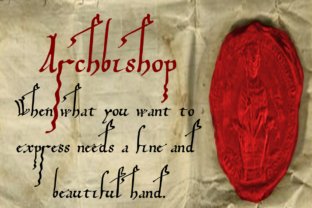
Archbishop: A Strategic Font Rooted in Medieval History for Modern Decision-Making
When you choose a typeface for a project, you are making a statement about intent, tone, and audience. Few fonts carry the weight of a story that connects directly to a pivotal historical moment. Archbishop is not merely a decorative option—it is a functional asset built from the legal documents of Archbishop Arnold von Selenhofen, who in 1150 granted Hildegard von Bingen and her nuns rooms at the Rupertsberg Monastery. This font contains over 900 characters for modern use and comes in both TTF and OTF flavors, making it a versatile tool for anyone who needs their words to communicate authority and depth.
The connection to a specific medieval context is not accidental. Archbishop Arnold’s decision to support Hildegard’s community was a strategic one, reflecting an understanding of value and long-term planning. Similarly, using Archbishop in your own work signals a deliberate choice—one that respects history while serving contemporary goals. This article explores how you can harness this font’s unique character for branding, communication, and operational success, while avoiding common pitfalls.
What Makes Archbishop Strategically Useful
At its core, Archbishop is a bridge between historical authenticity and modern utility. With over 900 characters, it supports extensive typographic needs, from headlines to body text, across various media. The font’s origins in legal documents suggest a focus on clarity and permanence—qualities that translate well into professional contexts. For entrepreneurs and decision-makers, this means you can rely on it to convey trustworthiness without sacrificing readability.
The availability of both TTF and OTF formats ensures compatibility across platforms. Whether you are designing a website, drafting a print brochure, or creating digital assets, Archbishop offers consistency. This is particularly valuable for small business owners and freelancers who need to manage multiple projects without technical friction.
Grounded in Historical Authenticity
The story behind Archbishop adds a layer of narrative to your work. When you use it, you implicitly reference a moment of institutional support and cultural shift—the granting of space to Hildegard von Bingen, a figure known for visionary work. This association can enhance your brand’s storytelling, especially if your audience values heritage or intellectual depth. Marketers and publishers can leverage this by pairing the font with content about tradition, innovation, or resilience.
Aligning Font Choice with Your Goals
Every strategic decision should connect to an objective. Before you adopt Archbishop, consider what you aim to achieve. Are you building brand recognition? Improving communication clarity? Enhancing creative output? The font’s design, rooted in medieval legal scripts, leans toward formality and structure. This makes it ideal for projects that require credibility—such as legal documents, historical publications, or premium branding for professional services.
For educators and bloggers, using Archbishop for headings or key quotes can emphasize authority. For example, a blog post about medieval governance or institutional change would benefit from the font’s authentic feel. Similarly, a marketing campaign for a heritage product could use it to tie modern quality to historical roots.
Practical Planning Tips for Implementation
- Define your tone: Determine if formal, authoritative, or thoughtful aligns with your message. Archbishop carries those connotations naturally.
- Test readability: Because it is inspired by script, check legibility at smaller sizes for body text. Larger sizes may work better for headers.
- Pair it wisely: Combine Archbishop with a simpler sans-serif font for contrast. This prevents visual overload while maintaining interest.
- Use it consistently: Apply it across a single project or brand identity to build recognition. Sporadic use can dilute its impact.
These steps help you use Archbishop intentionally rather than randomly. Without clear goals, any font choice risks becoming noise.
Applying Archbishop Across Use Cases
The versatility of Archbishop extends beyond its historical appeal. Its 900+ character set covers modern Unicode ranges, including accents, punctuation, and symbols. This makes it practical for multilingual projects or specialized content. For creators and hobbyists working on fantasy or period pieces, the font adds an layer of immersion. For professionals, it can differentiate materials in competitive fields.
Branding and Positioning
Consider a law firm aiming to project tradition and reliability. Using Archbishop for the firm’s name on letterheads or websites immediately communicates heritage. Similarly, a boutique publisher specializing in historical texts can use it for cover designs or chapter headings. The key is to match the font’s weight to your brand’s personality. Archbishop works best when you want to evoke patience, depth, and meticulousness—qualities that resonate with high-net-worth clients or academic audiences.
Communication and Customer Experience
In customer-facing materials, consistency builds trust. If you use Archbishop for email templates, invoices, or guides, you create a cohesive experience. For example, a freelancer sending proposals could use it for the header and signature block, reinforcing a professional yet personal tone. This attention to detail can improve perception and response rates.
Strategic Observations on Creativity and Productivity
Using a distinctive font like Archbishop can also stimulate your own thinking. For writers and designers, changing a tool often shifts perspective. The deliberate act of choosing a historically grounded typeface may encourage more thoughtful composition. You might find yourself focusing on word choice or layout rhythm, which enhances overall quality. This is not about the font doing the work—it is about how constraints and choices influence process.
For productivity, having Archbishop in TTF and OTF formats means no delays in workflow. You can install it quickly and use it across applications. This efficiency matters for small teams or solo operators who cannot afford technical hiccups.
Weighing the Risks of Using Archbishop Without Context
No tool is neutral. Using Archbishop without clear intent can lead to mismatched branding or confused audiences. If your brand is modern, minimalist, or tech-focused, a medieval-style font may feel out of place. The risk is that it looks ornamental rather than purposeful. For example, a startup pitching to venture capitalists might benefit more from clean sans-serif typefaces that emphasize clarity over ornamentation.
Another risk is overuse. Because Archbishop is visually distinctive, using it for large blocks of text can strain readability. Pair it sparingly. Also, consider your audience’s expectations: if they associate script fonts with old-fashioned or quaint styles, your message might not translate well. Test the font with a sample group before full deployment.
Decision-Making Guidance for Implementation
- Assess your brand’s core values: Does tradition, authority, or authenticity matter? If yes, Archbishop aligns well.
- Evaluate your medium: It works best in print or high-resolution digital formats. On low-end screens, fine details may blur.
- Plan for longevity: If you intend to use the font for years, ensure it fits with evolving trends. Historical fonts tend to age gracefully, but periodic reassessment helps.
- Consider licensing: Verify that your use case—commercial, personal, or web—is covered by the font’s license. This avoids legal issues.
These steps help you decide whether Archbishop is a strategic asset or a distraction. The goal is intentionality.
Long-Term Value of Incorporating Historical Elements
In a world of generic design, specific choices stand out. Archbishop offers a path to differentiation that is grounded in real history, not fabricated nostalgia. This can build brand equity over time. For decision-makers, investing in a font with such provenance signals a commitment to quality and thoughtfulness. It becomes part of your operational DNA, much like the careful planning behind Arnold von Selenhofen’s decision to support Hildegard’s work.
Think of it as a long-term asset. The font does not need to be trending—it needs to be meaningful. When used with strategy, Archbishop can reinforce positions, enrich stories, and support learning environments. Educators can use it to spark discussions about medieval history or typography. Bloggers can use it to create memorable headers that keep readers engaged. The key is to treat it as part of a larger plan, not a standalone choice.
Practical Example: A Publisher’s Use of Archbishop
Imagine a small publishing house releasing a new edition of Hildegard von Bingen’s works. They choose Archbishop for the title page and chapter headings, pairing it with a clean serif for body text. The font immediately connects the modern edition to its historical roots. Bibliophiles appreciate the authenticity, and the publisher establishes a series identity. This decision supports both branding and customer experience—readers feel they are holding something special.
For a freelancer designing a certificate of authenticity for a historical replica business, Archbishop adds weight to the document. The legal script origins make it feel official. The client’s perception of value increases, potentially justifying higher pricing.
Final Thoughts on Intentional Font Use
Choosing Archbishop is not about following a trend—it is about making a purposeful decision that aligns with your objectives. Whether you are an entrepreneur building a brand, a marketer crafting a campaign, or an educator developing materials, this font offers a rare combination of historical depth and modern practicality. With over 900 characters and both TTF and OTF options, it provides the flexibility needed for serious work. The story of Arnold von Selenhofen and Hildegard von Bingen reminds us that the best decisions are those that recognize value and act on it. Use Archbishop thoughtfully, and it will serve your goals for years to come.