Thatch: A Modern Script Font for Thoughtful Design
When you choose a typeface, you are making a statement before a single word is read. The right font sets tone, conveys personality, and influences how your message is received. For designers, content creators, and business owners who want their text to feel both polished and approachable, the search for a script font that balances elegance with readability can be surprisingly difficult. Many script faces lean heavily into ornate flourishes or rigid calligraphy, making them unsuitable for extended reading or professional contexts. Thatch, a modern script font created by JoeeCreative, offers a compelling alternative—one that brings warmth without sacrificing clarity, and character without compromising function. This article explores what makes Thatch distinctive, who can benefit most from using it, and how it may support your creative or professional goals in practical, meaningful ways.
What Is Thatch and Why Does It Stand Out?
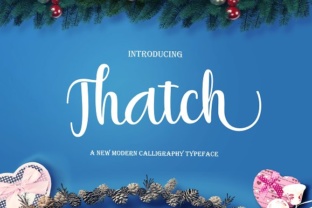
Thatch is a contemporary script typeface designed by JoeeCreative, foundry known for crafting fonts that feel current yet timeless. Unlike many script fonts that imitate traditional handwriting or calligraphy with heavy swashes and dramatic strokes, Thatch takes a more restrained approach. Its letterforms are fluid and natural but remain clean and legible at various sizes. The font carries a handcrafted feel—subtle variations in stroke weight and gentle curves give it an organic quality—yet it never sacrifices structure for style. This balance makes Thatch suitable for a surprising range of applications, from branding and social media graphics to product labels and digital correspondence.
The name itself suggests something woven together deliberately, piece by piece. That is exactly what this font does: it weaves together the best aspects of modern script design—approachability, movement, and personality—into a typeface that feels both intentional and effortless. For anyone who has struggled with script fonts that look too formal, too casual, or simply hard to read, Thatch offers a middle ground that works harder than most.
Improving Readability Without Sacrificing Style
One of the most common frustrations with script fonts is that they look beautiful in logos or headlines but become nearly unreadable in body text or smaller sizes. Thatch addresses this directly. Its letterforms are designed with open counters, clear distinctions between similar characters, and consistent slant angles that guide the eye naturally. This means you can use Thatch not only for headings and display purposes but also for shorter paragraphs, captions, or quote cards, and still maintain legibility. For bloggers and content creators who want a cohesive visual identity, being able to use a single script font across multiple contexts simplifies design decisions and ensures consistency.
Saving Time in Design Workflows
When a font requires constant adjustments—tweaking kerning, resizing, or swapping it out for something more readable—it slows down your creative process. Thatch comes with built-in OpenType features including ligatures, alternate characters, and contextual swashes that handle much of the spacing and variation automatically. This means less time spent manually adjusting letter pairs and more time focusing on content and composition. For freelancers, small business owners, and marketers who manage their own design tasks, this efficiency is a concrete advantage. You can drop Thatch into a project and trust that it will perform well without extensive fine-tuning.
Strengthening Brand Identity and Emotional Connection
Typography plays a powerful role in shaping how people perceive a brand. A font that feels too corporate can create distance; one that feels too playful may undermine credibility. Thatch occupies a sweet spot: it is warm and human without being sloppy, and professional without being stiff. This makes it particularly effective for businesses in lifestyle, wellness, creative services, hospitality, and e-commerce. A wedding planner, for instance, could use Thatch in invitations, website headers, and social media posts to convey elegance and personal attention. A small-batch skincare brand might use it on product labels to suggest care, craftsmanship, and natural ingredients. In both cases, the font reinforces the brand story without competing with it.
Who May Benefit Most From Thatch?
While Thatch is a versatile tool, its strengths align particularly well with certain use cases and audiences. Understanding where it excels helps you decide if it fits your specific needs.
Content Creators and Bloggers
If you produce digital content regularly—blog posts, social media visuals, email headers, YouTube thumbnails—you know how much visual consistency matters. Thatch works beautifully as a title or accent font that adds flair without overwhelming your message. Pair it with a clean sans-serif for body text, and you create a polished, layered look that feels intentional. Because Thatch is legible at medium sizes, you can also use it for pull quotes or side notes, giving your pages a more editorial feel. For lifestyle, travel, fashion, or food bloggers, this can elevate the overall aesthetic and keep readers engaged longer.
Small Business Owners and Entrepreneurs
When you are running a business, every asset you create—from your logo to your invoices—reflects your brand. Thatch offers a script option that is professional enough for formal communications yet warm enough to feel personal. A boutique owner might use it in signage and tags; a coach or consultant could incorporate it into client materials and slide decks. The font’s flexibility means you do not need multiple typefaces for different purposes; Thatch can serve as a consistent thread across your brand touchpoints, simplifying your decision-making and reinforcing recognition.
Educators and Course Creators
In educational materials, visual clarity is non-negotiable. Thatch can be used effectively in course titles, section headers, and worksheets, provided it is paired with a highly readable body font. Its approachable tone helps create a friendly learning environment, which can be especially valuable for courses targeting adults returning to study or creative learners. A course on journaling, calligraphy, or creative writing, for example, would benefit from Thatch’s handcrafted feel. It signals that the material is made by a person, not just generated by software.
Hobbyists and DIY Enthusiasts
Not every user of Thatch is a professional designer. Hobbyists creating invitations, party decorations, scrapbooks, or personal gifts can leverage the font to add a sophisticated touch to their projects. Because Thatch includes multiple alternate characters, users can experiment with different letterforms to create custom looks without needing advanced design skills. This makes it accessible to anyone who wants better results without a steep learning curve.
Realistic Use Cases and Recommendations
To get the most out of Thatch, consider how it plays with other elements in your compositions. Pair it with neutral, geometric sans-serifs like Montserrat, Lato, or Open Sans for a modern contrast. Avoid pairing it with another script font, which can create visual competition and reduce readability. Use Thatch for short to medium-length text; for long paragraphs, a standard serif or sans-serif remains preferable. This is not a limitation of the font itself, but a best practice for script typefaces in general.
In digital contexts, Thatch performs well on screens when used at 16px or larger. For print applications—business cards, flyers, product packaging—the font retains its character even at smaller sizes, but always test a sample before committing to large runs. The alternate ligatures and swashes are best used sparingly; as with any script font, reserving flourishes for initial letters or key words creates emphasis without clutter.
One thoughtful observation worth making: Thatch is not the right choice for every brand or project. If your identity demands extreme minimalism, strict formality, or high-tech edge, a script font—no matter how well designed—may feel out of place. Compare options like a clean sans-serif for tech brands or a classic serif for legal or academic contexts. The best font is the one that aligns with your message and audience. Thatch excels when you want to communicate approachability, craftsmanship, and a human touch.
Potential Limitations and Fit Considerations
No single font is perfect for everything, and Thatch is no exception. Its script nature means it works best in contexts where a personal, warm, or creative tone is appropriate. For very formal documents, government communications, or data-heavy reports, a more neutral typeface would serve better. Additionally, while Thatch includes useful OpenType features, not all software or web platforms support these equally. Before finalizing a project, verify that your tools can handle alternates and ligatures, especially if you are using a simple online editor or mobile app. For designers working in Adobe Creative Suite, Affinity products, or web platforms with robust typography settings, these features will function as intended. For others, the font will still look good, but you may lose some of the nuanced variation that makes Thatch special. This is a practical consideration worth checking rather than a dealbreaker.
Final Thoughts on Thatch
Choosing a font should not feel like a compromise between beauty and utility. Thatch demonstrates that a modern script typeface can deliver both—offering warmth, personality, and visual interest while remaining readable and versatile enough for real-world projects. Whether you are building a brand, designing content, or simply looking for a font that makes your words feel more human, Thatch deserves a place in your toolkit. It works because it respects the reader’s experience while honoring the creator’s need for expression. That is a rare combination, and one that makes Thatch a genuinely useful resource for professionals, creators, and hobbyists alike.