Marilena: A Smooth, Elegant Font with Effortless Swash Features
When selecting a typeface for a project, the balance between visual appeal and practical legibility often determines success. Many decorative fonts sacrifice clarity for style, while utilitarian faces lack the personality needed to elevate a design. Marilena occupies a useful middle ground. This smooth, elegant font combines soft letterforms with distinctive long start and ending swashes, offering a refined look without compromising readability. For professionals, creators, and business owners who need a typeface that works across multiple contexts, Marilena presents a practical option worth evaluating.
What Makes Marilena Distinct
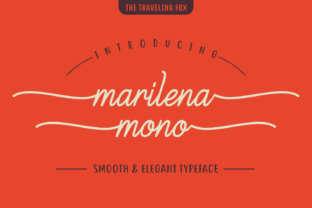
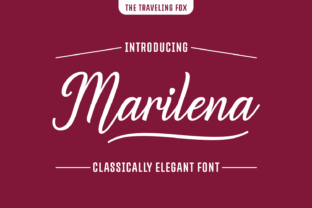
Marilena is a display-oriented typeface defined by its gentle, flowing curves and consistent stroke weight. The letters feel warm and approachable rather than rigid or overly formal. The softness of each character contributes to a reading experience that feels natural and unhurried, which is uncommon among fonts designed with ornamental elements. The swashes are built into the lowercase character set through a simple typing convention. By entering an underscore followed by the number 1 before or after a word, users can append a long start or ending swash without any special software, OpenType features, or alternate glyph panels. This accessibility means that anyone comfortable with basic keyboard input can produce ornate typography in seconds.
The font includes both uppercase and lowercase characters, numerals, punctuation, and basic Latin language support. The swash system is its most notable feature, but the core letterforms are carefully drawn to be self-sufficient. Even without using the swash feature, Marilena reads as a polished, elegant typeface suitable for headings, logos, invitations, and short-form text. The long swashes extend gracefully from the beginning and end of words, creating a flowing, calligraphic rhythm that mimics hand-lettering without the inconsistency of manual work.
Legibility and Reading Experience
Despite its decorative nature, Marilena maintains strong legibility. The open counterspace inside letters like a, e, and o prevents crowding, and the moderate x-height ensures that lowercase characters remain distinguishable at typical display sizes. The soft curves do not introduce ambiguity between similar glyphs. For example, the n and h retain clear vertical stems, and the r and n are distinct even in longer words. This reliability matters when the font is used in client-facing materials, product packaging, or marketing collateral where misreading a word could undermine professionalism.
The swashes, while ornamental, do not interfere with word boundaries. They extend outward from the first and last letters without overlapping adjacent text or disrupting line spacing. This design choice preserves the integrity of each word block, making Marilena suitable for multi-word headlines and short phrases. In testing across digital mockups and printed samples, the font holds up well at sizes from 18 points upward. Below that threshold, the swashes may feel proportionally large, so body text applications are not recommended unless the point size is generous and tracking is adjusted.
Practical Applications and Real-World Performance
Marilena performs best in contexts where a touch of elegance supports the message without overwhelming it. Common use cases include wedding invitations, greeting cards, branding materials for boutique businesses, social media graphics, blog headers, product labels, and certificate templates. The font also works well for logos that require a handwritten or calligraphic feel but need to remain reproducible across print and digital media. Because the swashes are generated through standard keystrokes, designers can automate the ornamentation process in templated systems like Canva, Adobe Express, or Microsoft Word without manually placing vector embellishments.
In a real-world scenario, a small business owner selling handmade skincare products might use Marilena for product name labels and promotional banners. The soft letterforms align with a natural, artisanal brand identity, while the swashes add a custom, crafted appearance. A wedding planner could use the font for invitation suites, place cards, and signage, maintaining visual consistency across printed and digital pieces. For bloggers and content creators, Marilena works as a headline font that introduces a personal, reflective tone without looking overly scripted or fussy.
One practical advantage is the font's behavior in multi-line settings. Because the swashes attach only to the first and last characters, they do not create inter-line conflict when leading is set appropriately. A typical line height of 1.4 to 1.6 times the font size keeps swashes from colliding with ascenders or descenders in adjacent lines. This reliability reduces the need for manual kerning or spacing adjustments, saving time during layout production.
Quality, Usability, and Flexibility
The construction of Marilena reflects attention to detail in both vector quality and curve consistency. The stroke modulation is even, with no abrupt thickness changes or uneven joins. This technical consistency ensures that the font renders cleanly at typical output resolutions, whether on screen at 72 dpi or in print at 300 dpi. The font file itself is lightweight, and loading times in design software are negligible.
Usability is where Marilena shines compared to many ornamental fonts. The underscore-number-one system is intuitive and eliminates the learning curve associated with OpenType stylistic sets or ligature tables. A user who has never worked with swashed fonts before can produce a polished result in under a minute. This low barrier to entry makes the font accessible to non-designers, including entrepreneurs, educators, and hobbyists who may not have advanced typography skills but still need professional-looking materials.
Flexibility is somewhat constrained by the font's decorative nature. Marilena is not a workhorse typeface suited to extended reading, dense text blocks, or corporate documentation. Its strength lies in short-form, display-oriented contexts. However, within that scope, it offers considerable versatility. The swashes can be omitted entirely by simply not using the underscore combination, allowing the plain letterforms to stand alone. This dual-mode capability means that a single font can serve both ornate and understated needs within the same project.
Who Benefits Most from Marilena
Entrepreneurs and small business owners who manage their own branding will find Marilena practical for creating cohesive visual identities without hiring a designer. The font enables consistent, attractive typography across product packaging, website headers, and social media posts. Wedding and event planners can use it to build invitation suites that feel bespoke while maintaining reproducibility for multiple guests. Freelance graphic designers working with boutique clients will appreciate the time savings from the built-in swash system, especially when producing multiple mockups or variations.
Bloggers and content creators who want a signature headline style can adopt Marilena to establish a recognizable visual voice. The soft, elegant tone suits lifestyle, wellness, design, and personal development niches. Educators creating certificates, worksheets, or classroom materials can add a polished finish with minimal effort. Marketers producing email headers, landing page titles, or call-to-action banners can leverage the font's emotional warmth to increase engagement without sacrificing professionalism.
Print-on-demand sellers and product designers will find value in Marilena for items like mugs, T-shirts, journals, and wall art. The swashes add perceived value to simple text layouts, making products appear more premium. Because the font is licensed for commercial use under standard terms, sellers can incorporate it into merchandise without legal ambiguity.
Limitations and Practical Considerations
Marilena is not without limitations. The swash system, while convenient, only attaches to the first and last characters of a word. Intermediate letters cannot receive swashes through this method, which means the font does not produce fully connected calligraphic scripts. For projects requiring continuous cursive flow, a dedicated script font with extensive ligatures may be more appropriate. Additionally, the underscore-number-one convention can appear in exported text if the software does not interpret the keystroke correctly, though this issue is rare in modern applications.
The font's stylistic range is centered on elegance and softness. It does not convey boldness, urgency, or industrial strength. Brands or messages that require aggressive or modern minimalism should look elsewhere. Language support is limited to basic Latin characters, so users working with Central or Eastern European languages, or non-Latin scripts, will need supplemental typefaces.
In digital environments, the swashes may appear disproportionately long on small screens if responsive font sizing is not managed carefully. Testing at various breakpoints is recommended for web use. For printed materials, the swashes should be reviewed at actual production size to ensure they do not extend beyond trim margins or bleed areas.
Assessing Long-Term Value
Marilena offers lasting value for users whose typography needs align with its strengths. The font does not rely on trendy aesthetics; its soft, elegant character is timeless enough to remain relevant across seasonal campaigns and rebranding cycles. The straightforward swash system makes it easy to hand off to team members or clients who may not be design-savvy, ensuring consistency even when multiple people produce materials. For a single purchase, the font provides a reliable tool that can serve dozens of projects over several years.
The lack of complex technical requirements also future-proofs the font. As long as underscore and number keys remain standard on keyboards, the swash feature will work. There is no dependency on specific software versions, operating systems, or OpenType engine implementations. This simplicity is a real advantage for users who want a decorative font that will function predictably across environments and over time.
Marilena does not attempt to be everything to everyone. It is a focused tool for elegant display typography with minimal friction. For the right audience, that focus translates directly into time saved, quality maintained, and visual impact achieved. Professionals and creators who value efficiency, readability, and a refined aesthetic will find Marilena a worthy addition to their typeface library.