Schoensperger Der Altere: A Pioneer of Early German Printing and Its Enduring Relevance
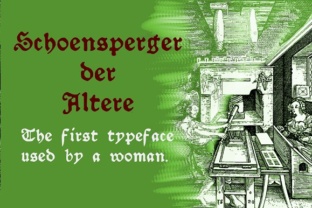
Johann Schönsperger der Ältere—often referred to as Schoensperger Der Altere in historical typography circles—was a key figure in the dawn of European printing. Active in Augsburg during the last two decades of the 15th century, he produced several editions of a pre-Luther Bible and left a lasting mark on the craft. His sister, Anna Rügerin, is recognized as the first recorded female printer, and her edition of Eike of Repgow’s Sachsenspiegel used the typeface exemplar GTF 1 120G. For modern readers, researchers, and design professionals, understanding Schoensperger Der Altere offers practical insights into early book production, legal history, and typographic heritage. This article explores who he was, why his work still matters, and how you can apply that knowledge today.
Why Schoensperger Der Altere Matters Today
At first glance, a printer from five centuries ago might seem like a niche historical footnote. Yet the challenges that Schoensperger Der Altere faced mirror many issues we grapple with today: how to produce clear, reliable text at scale; how to balance tradition with innovation; and how to preserve cultural knowledge for future generations. For anyone involved in publishing, typography, or historical research, his methods and output offer concrete lessons.
- Preservation of legal and religious texts: Schoensperger Der Altere’s pre-Luther Bibles and his sister’s Sachsenspiegel (a foundational German law book) are primary sources for understanding late medieval society. Researchers need accurate facsimiles and digital editions.
- Typography and font revival: The exemplar GTF 1 120G, used in Anna Rügerin’s printing of the Sachsenspiegel, is a reference point for type designers seeking to recreate authentic 15th-century Gothic fonts. Understanding its proportions and stroke contrasts helps modern font developers produce historically informed typefaces.
- Historical accuracy in design: Graphic designers and publishers working on period-themed projects require reliable models. Schoensperger Der Altere’s printed pages serve as benchmarks for layout, spacing, and decorative elements.
- Women’s contributions to printing: The story of Anna Rügerin, sister of Johann Schönsperger der Ältere, is crucial for historians documenting early female entrepreneurship in the book trade. Her work challenges assumptions about gender roles in the incunabula period.
Whether you are a historian verifying a citation, a type designer studying the GTF 1 120G exemplar, or a collector identifying a rare imprint, the legacy of Schoensperger Der Altere provides a verifiable, tangible foundation.
Practical Applications of Schoensperger’s Legacy
Understanding what Schoensperger Der Altere accomplished opens the door to several practical outcomes. Here are ways different users can apply this knowledge immediately.
For Historians and Researchers
The pre-Luther Bibles printed by Johann Schönsperger der Ältere are invaluable for studying textual variants before the Reformation. If you are tracing the dissemination of biblical texts in German, comparing his editions with those from other Augsburg printers (like Günther Zainer) reveals regional differences in translation and commentary. Additionally, Anna Rügerin’s Sachsenspiegel (c. 1484) is a landmark: it is one of the earliest printed legal codes and shows how movable type was used to standardize law. Accessing digitized copies via libraries like the Bavarian State Library or the Augsburg University Library allows you to examine marginalia and printer’s marks without traveling.
Recommendation: Use the GTF 1 120G exemplar as a reference when cataloging or describing early German types. Noting its specific shapes—such as the distinctive uppercase 'A' or the long 's'—helps distinguish Schoensperger Der Altere’s work from that of his contemporaries.
For Type Designers and Font Developers
The exemplar GTF 1 120G is a goldmine for reviving 15th-century Gothic script for modern digital use. Schoensperger Der Altere’s typeface (often called a Schwabacher or Textura derivative) has characteristic features: narrow capitals, angular lowercase ascenders, and a dark texture on the page. If you are creating a display font for historical reprints or designing a book on early printing, studying the GTF 1 120G exemplar helps you capture the authentic “color” of incunabula pages.
Practical step: Obtain high-resolution scans of the Sachsenspiegel pages printed by Anna Rügerin that use this exemplar. Trace the letterforms in vector software, paying attention to weight distribution and the angle of the nib. Compare your progress with other fonts that claim to revive Schoensperger Der Altere’s style—many modern interpretations simplify the quirky details that make his work unique.
For Collectors and Antiquarian Booksellers
Identifying a genuine Schoensperger Der Altere imprint requires knowing his habits. He often used a distinctive printer’s device, and his name appears in the colophon as “Johann Schönsperger” or “Hans Schönsperger.” His pre-Luther Bible editions are especially sought after. When appraising or listing such an item, note the condition of the initial leaves, the presence of rubrication, and the binding style typical of Augsburg workshops.
Resource: Consult the Gesamtkatalog der Wiegendrucke (GW) for detailed entries on Schoensperger Der Altere. Collaboration with rare book librarians can confirm provenance. Understanding the relationship with Anna Rügerin also adds historical value—a copy with her ownership marks could be a significant find.
For Educators and Museum Professionals
Teaching the history of printing often focuses on Gutenberg, but Schoensperger Der Altere represents the next generation that spread the technology across Germany. His pre-Luther Bibles illustrate how printed Scripture evolved before the Reformation. Exhibitions can feature his work alongside Anna Rügerin’s Sachsenspiegel to highlight gender diversity in early printing.
To make this accessible to adults, create a timeline showing how Schoensperger Der Altere’s production in Augsburg overlapped with the establishment of other presses. Include images of the GTF 1 120G exemplar to demonstrate typeface continuity between his shop and his sister’s.
How Different Users Can Approach Schoensperger Der Altere
No single “correct” way exists to engage with this topic. Your goals determine which aspects are most useful.
- If you are a genealogist: Trace the Schönsperger family in Augsburg records. Johann Schönsperger der Ältere had sons who continued the trade, including Johann the Younger. Understanding the family business helps contextualize Anna Rügerin’s role as both sister and printer.
- If you are a software developer building a font: Use the GTF 1 120G exemplar as a ground truth for developing an OpenType font. Pay attention to required ligatures (e.g., ‘tt’, ‘ck’) that are authentic to Schoensperger Der Altere’s typeface.
- If you are a student of law or political history: The Sachsenspiegel printed by Anna Rügerin is a key witness to how legal custom was codified. Compare her edition with later ones to see amendments.
- If you are a printmaker: Try your hand at setting type using a replica of the GTF 1 120G font. The physical constraints of metal type—such as the limited number of sorts—explain why Schoensperger Der Altere used abbreviations; this practical knowledge improves historical craft recreations.
Whatever your angle, starting with the primary source material is essential. Libraries such as the Augsburg Staats- und Stadtbibliothek hold digitized copies of works by Schoensperger Der Altere and Anna Rügerin. Examine them firsthand to appreciate the quality of printing and the nuances of the GTF 1 120G exemplar.
Useful Considerations When Working with Schoensperger Material
Before diving in, keep a few points in mind to avoid common pitfalls.
- Terminology matters: “Schoensperger Der Altere” is sometimes written as “Johann Schönsperger der Ältere.” Consistency helps when searching databases. Note that “the Elder” distinguishes him from his son.
- State of preservation: Many incunabula have been rebound, trimmed, or washed. The condition affects research on original layout. For type design, rely on unobtrusive scans of unaltered leaves.
- Attribution debates: Some works are attributed tentatively to Schoensperger Der Altere because his shop marks can be inconsistent. Check the GW or the Incunabula Short Title Catalogue (ISTC) for consensus.
- Anna Rügerin’s role: She was his sister, not his wife. Their relationship is well documented. Her edition of the Sachsenspiegel using the GTF 1 120G exemplar is the first known book printed by a woman. Acknowledge her contribution separately from her brother’s.
When seeking practical answers about early printing techniques, remember that Schoensperger Der Altere worked in a period of rapid experimentation. His edition of the pre-Luther Bible, for example, used two columns with 42 lines—a choice influenced by the Gutenberg Bible. As you examine his pages, note paper quality, ink density, and presswork. Those observations can guide restoration or modern facsimile production.
Moving Forward with Schoensperger Der Altere
The legacy of Schoensperger Der Altere is not locked in a museum; it lives in the typefaces we use, the historical data we analyze, and the stories we tell about the spread of literacy. Whether you are designing a wedding invitation in a Gothic style, verifying a legal citation from the Sachsenspiegel, or merely curious about the first woman printer, the work of Johann Schönsperger der Ältere and his sister offers a rich, practical resource.
Begin by exploring the digitized exemplars available online. Search for “GTF 1 120G” or “Anna Rügerin Sachsenspiegel” to see the precise typeface. Then apply what you learn—trace a letterform, compare a colophon, or add a note to your next publication. Half a millennium later, Schoensperger Der Altere still helps us print, read, and understand.