The Strategic Power of Headbanger: Why a Heavy Metal Font Deserves a Place in Your Creative Toolbox
At first glance, a font inspired by heavy metal album covers and posters might seem like a niche choice reserved for band logos and underground zines. But if you look closer, Headbanger is something more deliberate. It was built by pulling together the most iconic, visceral elements from decades of metal aesthetics, then refined through a process that began with inline forms and a playful cutout effect. The result is a typeface that carries immediate visual weight and a clear point of view.
For entrepreneurs, marketers, creators, and decision-makers across industries, understanding when and why to use a font like Headbanger is not about chasing a trend. It is about making a strategic choice that can sharpen your positioning, deepen your communication, and create memorable experiences. Used thoughtfully, Headbanger is not just loud. It is intentional.
What Headbanger Actually Brings to the Table
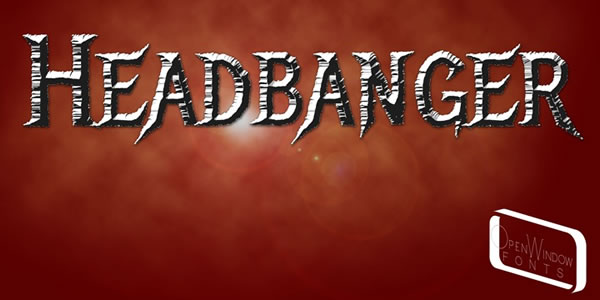
Headbanger is not a subtle font. It was never designed to be. The cutout effect gives it a hand-drawn, almost stenciled feel. The inline forms create a sense of depth and movement, as if the letters have been carved out of something solid. This is not a typeface that whispers. It declares.
What makes it strategically useful is that it carries a built-in set of associations: energy, rebellion, craftsmanship, and a certain old-school authenticity. If your goal is to communicate those qualities without having to explain them, Headbanger does the heavy lifting. It signals a specific cultural literacy and a willingness to stand apart from cleaner, safer design choices.
For a brand or a campaign that needs to feel grounded in a subculture or that wants to borrow the credibility of heavy metal's visual language, Headbanger offers a shortcut. It is a font that already has a story before it even touches your layout.
Aligning Typography with Strategic Goals
Every typography choice you make either supports or undermines your goals. The question is not whether Headbanger is a good font. It is whether it is the right font for the job you are trying to do.
Consider positioning. If you are launching a product or service that targets a younger, culturally engaged audience — or one that values authenticity over polish — Headbanger can signal that you are not trying to please everyone. That can be a powerful differentiator in a crowded market. A craft brewery, a guitar manufacturer, a tattoo studio, a gaming brand, or even a creative agency looking to rebrand with more edge might find that Headbanger aligns perfectly with the identity they want to project.
On the operational side, using a font like Headbanger on physical items — concert posters, guitar picks, merch tags, stickers, or packaging — creates a tactile, collectible feel. It tells your customer that someone cared about the details. That kind of attention supports long-term brand loyalty and word-of-mouth marketing.
When Headbanger Works Best
Headbanger shines in contexts where the medium itself is part of the message. Here are a few scenarios where it can deliver strong results:
- Concert and event posters: The cutout, inline look reads well at large sizes and in high-contrast color schemes. It captures the energy of live music and underground scenes.
- Product personalization: Guitar picks, patches, pins, and limited-run merch benefit from a font that feels handmade and iconic. Headbanger gives small objects a big identity.
- Brand headers and logos: For businesses that want a heavy, memorable wordmark, Headbanger can anchor a visual identity without needing additional ornamentation.
- Digital content with attitude: YouTube thumbnails, social media graphics, and website hero sections aimed at niche audiences can use Headbanger to cut through the noise.
In each of these cases, the font is not just decoration. It is a deliberate tool for positioning and attention.
Approaching Headbanger with Intentionality
The risk with any strongly characterized font is that it can overwhelm the message. Headbanger demands that the rest of your design step back. That is not a flaw — it is a constraint. And constraints, when understood, can lead to better creative decisions.
Before you commit to Headbanger in a project, consider the following planning questions:
- What is the primary emotional or cultural signal you want to send? If it is energy, rebellion, or craftsmanship, Headbanger is a strong candidate. If you need to convey trust, stability, or sophistication, you may want to pair it with a more neutral secondary typeface or reserve it for accents only.
- Where will the font appear? Headbanger works best at medium to large sizes. Small body text will lose the cutout detail and may become hard to read. Reserve it for headlines, logos, and short phrases.
- Who is your audience? If your audience is familiar with heavy metal visual culture, Headbanger will feel authentic and resonant. If they are not, you may need to contextualize it so it does not feel random or aggressive.
- How does it work with your other brand elements? Test Headbanger against your color palette, imagery style, and other fonts. It should look like it belongs, not like it was dropped in from a different project.
These questions turn a subjective design choice into a strategic one. They help you use Headbanger because it serves a purpose, not just because it looks cool.
Practical Examples of Headbanger in Action
Imagine a small business that produces handmade electric guitars. They use Headbanger on their headstock logo, on their pickup selector switch decals, and on their limited-edition runs of guitar picks. The font communicates that these instruments are built for players who value tone and attitude over mass production. It becomes part of the product story.
Or consider a marketing campaign for a horror-themed escape room. The posters use Headbanger for the title, paired with distressed textures and a dark color palette. The cutout effect echoes the feeling of something scratched into a wall. The font does not need to explain the genre — it already belongs there.
For a freelance music promoter, Headbanger on concert flyers and social media headers creates a consistent visual identity across shows. Over time, the font becomes a signature. Fans start to recognize that any poster using that look is likely a show worth checking out.
These examples show that Headbanger is not just a font. It is a branding asset when used consistently and with context.
The Risks of Using Headbanger Without a Plan
Like any strong tool, Headbanger can work against you if it is applied carelessly. The same qualities that make it memorable can also make it feel out of place or even off-putting to the wrong audience.
One common mistake is using Headbanger for long passages of text. It is not designed for readability at small sizes, and the cutout effect can cause letters to blend together. This can frustrate users and undermine the professionalism of your communication.
Another risk is brand misalignment. If your brand identity is built around minimalism, softness, or corporate trust, Headbanger will clash. It can confuse your audience or make your brand seem inconsistent. That does not mean you cannot use it — but it may need to be confined to specific touchpoints where its energy is appropriate, such as event materials or limited-edition products, rather than your main logo or website.
Finally, there is the risk of overuse. If every piece of communication shouts, nothing stands out. Headbanger is most effective when it is used sparingly and with purpose. Let it carry the weight of a headline or a logo, then let quieter fonts do the supporting work.
Making Headbanger Part of a Thoughtful Typography System
The most successful use of any font comes from having a system. Headbanger can be the anchor of that system, but it should not be the only player.
Consider pairing it with a clean sans-serif for body text and secondary information. The contrast will actually make Headbanger feel more impactful. The cutout, inline forms will pop against a simple, neutral background.
You can also vary the weight and size of Headbanger to create hierarchy. Using it at full size for a main headline, then scaling it back for subheads or accent words, gives you flexibility without introducing another typeface. This approach keeps the visual identity tight and intentional.
For digital use, test Headbanger at different screen sizes. The cutout effect may need slight adjustments in stroke width or letter spacing to remain legible on mobile devices. Small tweaks can make the difference between a design that feels finished and one that feels fragile.
Long-Term Value: Building Recognition Through Consistent Use
One of the most underestimated aspects of typography is its role in building brand recognition over time. When you consistently use Headbanger across touchpoints — posters, social media, packaging, merch — it becomes a visual shorthand for your brand. People do not need to read the name. They recognize the feeling.
This kind of recognition is hard to buy and easy to lose. By committing to a distinctive font like Headbanger and using it deliberately, you create a small but meaningful competitive advantage. It signals that you care about the details and that you are willing to make choices that others might avoid because they are too safe.
For small businesses, freelancers, and creators, that kind of distinction is valuable. It turns a design decision into a strategic asset.
Final Thoughts on Using Headbanger Strategically
Headbanger is not a font for every project. It is not a neutral choice. But that is exactly why it can be so effective when used with intention. It brings a strong cultural signal, a handcrafted feel, and a visual energy that is hard to replicate with generic typefaces.
The key is to treat Headbanger as a tool, not a decoration. Ask what it is doing for your goals. Plan where it will appear and how it will interact with other design elements. Consider your audience and the context. And do not be afraid to let it stand out — that is what it was built for.
Long live Headbanger, and long live the strategic thinking that gives it a meaningful place in your work.