Himilayan: A Blackletter Font Built Brick by Brick
If you have spent any time browsing fonts, you know the feeling. You scroll past dozens of typefaces, and nothing quite hits the mark. Some are too polished. Others feel like copies of copies. Every once in a while, though, a font lands that feels both fresh and familiar. That is exactly the space Himilayan occupies. It is a blackletter typeface, but one that breaks from expectation. It does not try to look like a medieval manuscript or a heavy metal album cover. Instead, it draws its soul from something much more grounded: the simple, honest act of laying bricks.
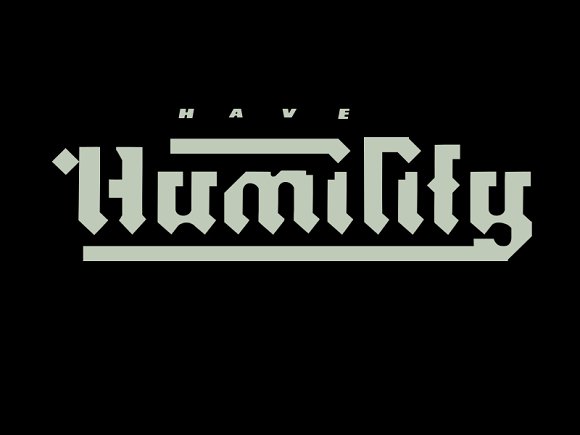
The idea started with a sketch and a question. Could a blackletter font feel blocky without losing its character? Could it be sturdy, structural, and still carry the ornate personality that makes blackletter so compelling? The answer became Himilayan. Each letterform was shaped with brick laying as a guiding metaphor. The strokes stack. They lock together. They create a rhythm that feels architectural. And yet, when you look at the full character set, there is something nostalgic about it. You feel like you have seen it before, even though it is entirely original. That tension between the old and the new is exactly what makes Himilayan useful for a wide range of creative work.
What Makes Himilayan Different from Other Blackletter Fonts
Most blackletter fonts fall into one of two camps. They are either heavily ornamented reproductions of historical scripts, or they are modernized versions that strip away the texture and weight that make blackletter interesting. Himilayan chooses a third path. It keeps the vertical emphasis and the angular drama of traditional blackletter, but it simplifies the forms into clean, block-like shapes. The inspiration from brick laying is not just a surface detail. It shapes how each letter sits on the line. There is a structural logic to the curves and breaks. The letters feel like they were assembled, piece by piece, rather than drawn in a single fluid motion.
This gives Himilayan a unique visual voice. It is bold without being aggressive. It is decorative without being fussy. For anyone who has struggled to find a blackletter font that works in modern layouts, this is a welcome middle ground. It has enough personality to stand on its own, but it does not overwhelm everything around it.
Who Benefits from Using Himilayan
Because Himilayan bridges the gap between traditional blackletter and contemporary design, it appeals to a broad audience. Beginners who are just exploring typography will find it approachable. You do not need a deep background in type history to see where and how it fits. The block-like structure makes it easier to pair with other fonts, which is a common challenge when working with blackletter. Casual users and hobbyists will appreciate that it adds instant character to posters, social media graphics, and personal projects without requiring hours of tweaking.
For professionals, Himilayan opens up possibilities that more ornate blackletter fonts do not. Marketers and small business owners can use it to create logos, signage, and packaging that feel handcrafted and authentic. It works especially well for brands that want to communicate tradition, quality, or a sense of place. Think of a brewery that wants its label to feel old-world but still readable. Or a coffee roaster that wants its packaging to evoke a craftsman workshop. Himilayan brings that visual story to life without drifting into cliché.
Educators and freelancers will find it useful for presentations, course materials, and client work where you need a touch of personality without sacrificing clarity. And for bloggers and content creators, it is a great way to add visual interest to headers, pull quotes, and featured images. It commands attention without shouting.
Practical Ways to Use Himilayan in Real Projects
Let us look at some specific scenarios where Himilayan shines. Imagine you are designing a poster for a local music festival. You want something that feels rooted and authentic, but the lineup includes both acoustic acts and electronic sets. A standard blackletter might feel too medieval. A clean sans-serif might feel too corporate. Himilayan gives you that handcrafted, brick-and-mortar feel that suits the outdoor, community-oriented vibe. You can set the festival name in Himilayan, use a simple sans-serif for the details, and the whole thing comes together naturally.
Or consider a small business that sells handmade ceramics. The brand is built on the idea of slow, intentional craft. The logo needs to reflect that. Himilayan, with its block-like forms and nostalgic undertones, communicates the same values that go into making a piece of pottery by hand. It does not try to be flashy. It just feels right. And because the letters have that structural, almost architectural quality, the logo holds up well in different sizes, from a website header to a stamp on a box.
Digital creators can also put Himilayan to good use. It works well in YouTube thumbnails, especially for channels focused on craftsmanship, history, urban exploration, or DIY projects. The font carries a sense of permanence and weight that helps thumbnails stand out in a crowded feed. Similarly, podcast cover art benefits from the texture Himilayan brings. A title set in this font feels like it belongs on a weathered sign or a workshop door, which immediately sets a certain tone for the listener.
What to Consider Before Using Himilayan
As with any typeface, there are a few things to keep in mind to get the best results. Himilayan is a display font at heart. Its block-like structure and blackletter roots mean it works best at larger sizes. Using it for long paragraphs of body text will likely strain readability. Stick to headlines, titles, logos, short phrases, and accent elements. That is where it does its best work.
Pairing is also worth thinking about. Because Himilayan has a strong visual character, it pairs best with simpler, more neutral typefaces. A clean sans-serif or a straightforward serif will let Himilayan take the lead without creating visual clutter. Avoid pairing it with another heavily decorative font unless you are very intentional about the effect.
Consider the context of your project as well. Himilayan carries a certain weight and history. It fits naturally with themes of tradition, craft, architecture, and authenticity. If your project is light, playful, or highly modern, you may want to use Himilayan sparingly or choose a different direction altogether. Knowing when not to use a font is just as important as knowing when it is the perfect fit.
Why Blackletter Continues to Inspire
There is something enduring about blackletter. It has been around for centuries, and it keeps finding new life. For the designer behind Himilayan, that fascination is ongoing. The challenge is always the same: how do you honor the tradition while making something that feels relevant today? Brick laying was the breakthrough. It gave the letters a structure that feels both ancient and modern. Each stroke sits on the next one, like bricks in a wall, and the result is a typeface that feels grounded and honest.
Himilayan is not trying to be the flashiest font in your collection. It is not trying to imitate a specific historical period. It is simply trying to be useful, unique, and familiar all at once. For anyone who works with type, that is a rare and valuable combination. Whether you are a beginner experimenting with your first logo, a freelancer building a brand identity, or a small business owner looking for a font that tells your story, Himilayan offers something real. It is a blackletter built from the ground up, one block at a time, and it is ready to be part of your next project.