Tecnica Slab Family: A Modular Slab Serif for Headlines and Text Blocks
When evaluating typeface options for a design project, the choice often comes down to balancing personality with readability. A slab serif can bring structure and presence, but not all slab serifs behave the same way across different sizes and contexts. The Tecnica Slab Family, designed by Pablo Balcells for Graviton Font Foundry, offers a distinctive take on the genre. It is a modular, geometric slab serif with a slightly condensed design and subtle rounded angles. This combination gives it a character that sits somewhere between the rigidity of pure geometric typefaces and the warmth of humanist designs.
If you are exploring slab serif options for headlines, short to medium-length text, or branding work, understanding what makes Tecnica Slab distinct can help you decide whether it fits your project. This article examines the family's structure, its strengths and limitations, how it compares with other slab serif approaches, and the scenarios where it may be the right choice or where you may need something different.
What Defines the Tecnica Slab Family
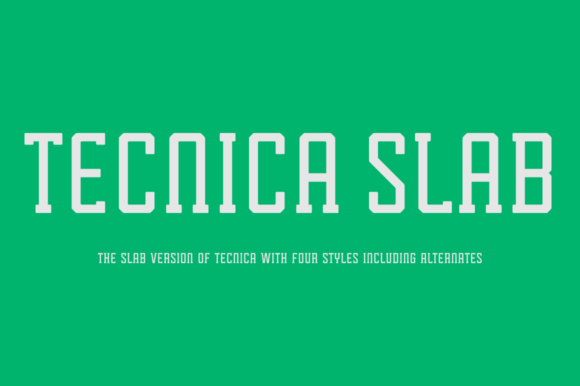
The Tecnica Slab Family consists of four styles across two weights, plus alternates for each. It includes small caps and glyph coverage for multiple languages, making it practical for multilingual projects. The design is modular and geometric, which means the letterforms are constructed from repeating shapes and consistent proportions. The slab serifs are blocky and sturdy, but the subtle rounding at the corners prevents the typeface from appearing harsh or mechanical.
The slightly condensed width is another defining feature. Compared to a standard slab serif, Tecnica Slab takes up less horizontal space, which can be useful when you need to fit more characters into a headline or a tight layout without reducing the font size. The condensed proportions also give the typeface a vertical emphasis, adding a sense of height and presence to text blocks.
The family includes both standard and alternate styles. The standard glyphs provide a classic, straightforward appearance that works well for formal or neutral contexts. The alternate characters introduce a more playful tone through modified letterforms, such as rounded terminals or altered proportions. This duality gives designers flexibility within a single typeface system.
Pablo Balcells designed Tecnica Slab specifically for Graviton Font Foundry, and it reflects a thoughtful approach to modular construction. Each letter feels built from a consistent set of parts, which gives the family a cohesive visual rhythm. This is especially noticeable in all-caps settings, where the geometric consistency becomes an asset.
Strengths and Best-Fit Situations
Tecnica Slab excels in headline applications. The combination of slab serifs, condensed width, and geometric structure creates strong, legible letterforms that command attention even at large sizes. Subtle rounding softens the overall impression, so headlines feel bold but not aggressive. For posters, magazine covers, banners, or digital hero sections, this typeface can deliver impact without sacrificing readability.
Short and medium-length text blocks also benefit from its design. The condensed proportions allow more words per line, which can help maintain a compact layout while keeping the text readable. The glyph coverage for multiple languages means you do not need to switch typefaces for different languages, simplifying workflow in multilingual projects.
The small caps are a practical addition. They enable typographic hierarchy within text without introducing a second typeface. For example, using small caps for subheadings, acronyms, or abbreviations keeps the visual language consistent. This is especially useful in editorial design, where maintaining a clean hierarchy matters.
Alternate styles add versatility. If a project calls for a more informal or playful tone, swapping in alternate characters can shift the mood without changing the typeface. This is useful in branding where a single typeface needs to serve multiple voices, such as a playful sub-brand or a campaign that requires a lighter touch.
Tecnica Slab is also well-suited for identity systems. The modular, geometric nature of the typeface means it pairs naturally with logo marks or icons built from geometric shapes. The slab serifs give it a confident, grounded feel that works for industries like technology, architecture, editorial, and creative services.
Tradeoffs and Limitations
No typeface is universal, and Tecnica Slab has tradeoffs worth considering. The condensed design, while space-efficient, may reduce readability in longer text passages. For extended body copy, readers may find the condensed proportions tiring, especially at smaller sizes. The geometric modularity also introduces a degree of uniformity that some designers may find limiting for long-form reading. If your primary need is a typeface for book-length text or dense documentation, a less condensed slab serif with more humanist proportions might be more comfortable.
The rounded angles, while appealing, can also soften the typeface to a degree that may not suit every brand voice. For projects that require a strict, corporate, or very formal tone, a sharper slab serif might communicate the intended seriousness more effectively. The alternates introduce playfulness, but that is an optional layer, not a guarantee of flexibility across all contexts.
Another tradeoff is the limited weight range. With only two weights, Tecnica Slab does not offer the extensive family that some large typeface superfamilies provide. If your project demands a wide range of weights from thin to black, you may need to supplement with another typeface or choose a more comprehensive family. The two weights are well-executed, but they impose boundaries on how much contrast you can achieve within the same family.
The modular geometric style also means that the typeface can feel less organic than slab serifs that draw inspiration from handwriting or traditional serif forms. If a project calls for a handcrafted, earthy, or highly expressive feel, Tecnica Slab may read as too precise or systematic.
How Tecnica Slab Compares with Other Slab Serif Approaches
Slab serifs as a category vary widely in structure. Some are rooted in the Scotch Roman tradition, with bracketed serifs and generous proportions. Others follow the geometric school, where serifs are blocky and shapes are constructed from circles and straight lines. Tecnica Slab falls firmly in the geometric camp, but with a few distinctions that set it apart.
Compared to traditional geometric slab serifs, Tecnica Slab is more condensed and features softer corners. This makes it feel slightly more contemporary and less rigid. The condensation also gives it a different rhythm: letters sit closer together, which can create a denser texture on the page. Traditional geometric slabs tend to be wider, offering more breathing room between letters. Your choice may depend on whether you need that openness or a tighter, more compact appearance.
Alternate styles are not universal across slab serifs. Many slab serif families offer a single stylistic approach. Having built-in alternates within the same family gives Tecnica Slab an edge for projects that need to toggle between formal and playful modes without switching fonts. This can simplify file management and keep the brand vocabulary consistent.
Small caps are also not a given in every slab serif. Their inclusion here adds value for editorial and identity work. If you often set abbreviations, subheadings, or secondary text in all caps, having small caps built into the family saves time and ensures consistent spacing.
Where Tecnica Slab may differ sharply from other options is in its modular construction. Some slab serifs are more organic, with varying stroke widths and less uniform letter shapes. Those typefaces can feel warmer and more dynamic, but they may lack the systematic order that Tecnica Slab offers. The modular approach is a strength for projects where consistency, alignment, and geometric harmony are priorities.
When Tecnica Slab May Be the Right Choice
Tecnica Slab is a strong candidate when your project requires a compact, geometric slab serif with personality. It is particularly well-suited for branding that involves technology, engineering, architecture, or creative services, where a polished, structured look is desirable. The typeface can anchor a visual identity with confidence while still offering warmth through the rounded details and alternate characters.
For editorial design, it works well as a headline face. Magazines, newsletters, and digital publications that rely on short to medium-length text can benefit from its condensed width and multilingual support. If you produce content in several languages and want a single typeface that covers all of them, Tecnica Slab simplifies your toolkit.
Packaging design is another area where this typeface can excel. The sturdy serifs and geometric forms hold up well on labels, boxes, and product wraps. The condensed proportions help fit longer product names or descriptions into limited space, which is often a constraint in packaging.
If you are designing a system that needs both a classic and a playful expression, the alternates allow you to shift tone without adding a second typeface. This can reduce complexity in brand guidelines and make implementation easier across different touchpoints.
When You May Need Another Option
If your primary need is a typeface for long-form body copy, such as novels, reports, or lengthy articles, Tecnica Slab may not be the most comfortable choice. The condensed proportions and geometric uniformity can cause reader fatigue over extended passages. A slab serif with wider proportions and more humanist variation would support longer reading sessions more effectively.
If your brand identity demands a very broad weight range, from thin to black, the two-weight structure of Tecnica Slab may feel limiting. In that case, a larger slab serif family or a versatile sans-serif companion may better serve your needs.
For projects that require an extremely rough, hand-drawn, or distressed look, the clean modularity of Tecnica Slab will not deliver that aesthetic. Its precision is an asset in many contexts, but it can be a limitation when you intentionally want imperfection or organic texture.
Finally, if your audience expects a traditional, literary, or academic tone, a slab serif with more classical roots and softer serif transitions might align better with their expectations. Tecnica Slab reads as contemporary and structured, which may not suit every cultural or institutional context.
Decision Factors to Consider
When evaluating Tecnica Slab for your project, consider the following factors:
- Primary use case: Headlines and short text blocks are its sweet spot. For long body copy, look elsewhere.
- Weight requirements: Two weights may be sufficient for many projects, but if you need a wide range, plan for a supplementary typeface.
- Tone: The standard styles are classic and neutral; the alternates add playfulness. Determine which tone your project needs most of the time.
- Language support: If you work across multiple languages, the glyph coverage is a practical advantage.
- Condensed proportions: These save space, but they also affect readability. Test at your intended sizes before committing.
- Modular vs. organic: If your design system relies on geometric shapes and consistency, Tecnica Slab aligns well. If you need variation and organic flow, consider a less rigid slab serif.
Practical Examples of Use
A technology brand launching a product line could use Tecnica Slab for its packaging, website headlines, and promotional materials. The condensed weight allows longer product names to fit on small boxes, while the rounded angles keep the brand approachable. Alternates could be used for limited-edition releases to signal a playful variation without breaking the visual identity.
An architecture firm might use the standard styles for its logo, business cards, and project titles. The geometric forms echo the precision of architectural drawings, and the slab serifs convey solidity. Small caps could be used for project codes or abbreviations in presentations, maintaining consistency across materials.
A magazine covering design and culture could use Tecnica Slab for section headers, pull quotes, and cover lines. The slightly condensed width allows more text to appear in large sizes without needing to reduce the font. Alternate characters could appear in feature articles to distinguish different editorial voices or sections.
A multilingual publication or website that publishes in English, Spanish, French, and German would benefit from the glyph coverage. Instead of sourcing separate typefaces for each language, the same family works across all content, simplifying production and ensuring visual consistency.
Final Considerations
Tecnica Slab Family offers a thoughtful balance of structure and subtle softness. Its modular geometric design, condensed proportions, and alternate styles give it a clear identity within the slab serif category. For headline work, medium-length text, and brand systems that value consistency and compactness, it is a practical choice that can deliver both impact and readability.
At the same time, its limitations in weight range and long-form readability mean it is not a one-size-fits-all solution. Evaluating your specific project needs, audience expectations, and typographic requirements will help you determine whether Tecnica Slab is the right fit or whether a different slab serif approach would serve you better. Understanding both the strengths and tradeoffs is the key to making an informed typeface decision.