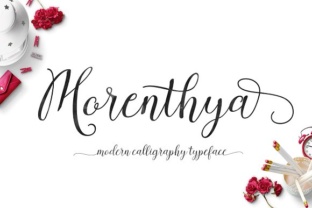
Understanding Morenthya: The Handwritten Font by Area Type – A Complete Guide
Typography is a silent storyteller. It shapes how readers perceive a message before they even process the words themselves. Among the vast landscape of digital typefaces, handwritten fonts occupy a special place. They bring humanity, warmth, and personality to text. One such font that has captured attention in recent years is Morenthya, a distinctive handwritten typeface created by the foundry Area Type. This article explores Morenthya from the ground up—what it is, why it matters, how it fits into modern design and communication, and how you can use it effectively.
What Is Morenthya?
Morenthya is a handwritten font designed and released by Area Type, a type foundry known for crafting expressive, character-driven typefaces. At its core, Morenthya mimics the natural flow of hand lettering, with irregular stroke weights, organic curves, and subtle imperfections that give it a genuine, unpolished feel. It is not a rigid, geometric sans-serif or a formal serif; it is a font that looks like it was written by hand with a marker, brush, or pen.
Unlike many script fonts that feel overly polished or digital, Morenthya retains a raw, authentic quality. Each letterform appears to have been drawn with intention, with slight variations in slant, pressure, and spacing that make it feel alive. This makes it an excellent choice for projects where you want to convey a sense of personality, approachability, or creative energy.
The Foundry Behind the Font
Area Type is a relatively boutique type foundry, but it has built a reputation for producing fonts that stand out in a crowded market. Their focus tends to be on display typefaces and handwritten styles that bring a human touch to digital media. Morenthya exemplifies this philosophy. The foundry prioritizes character over perfection, and Morenthya embodies that ethos with every glyph.
Why Handwritten Fonts Matter in Modern Design
In an increasingly digital world, people crave authenticity. Handwritten fonts like Morenthya help bridge the gap between cold, impersonal text and the warmth of human expression. They are used in branding, social media, packaging, invitations, websites, and product design to create an emotional connection with the audience.
Consider this: when you see a handwritten note, it feels personal. It feels like someone took the time to write something just for you. Digital handwritten fonts aim to replicate that feeling. They add a layer of humanity that standard typefaces often lack. Morenthya, in particular, excels at this because of its natural variation and slightly rough edges.
Common Misconceptions About Handwritten Fonts
Some people assume handwritten fonts are only suitable for casual or whimsical projects. That is not entirely true. While they are indeed popular for invitations, greeting cards, and social media posts, handwritten typefaces like Morenthya can work in more professional contexts when used thoughtfully. For example:
- Branding for creative businesses, solopreneurs, or lifestyle brands.
- Headers and titles on websites that want a friendly, approachable tone.
- Product packaging for artisanal or handmade goods.
- Advertising copy for campaigns targeting younger, design-savvy audiences.
The key is understanding when and how to use a handwritten font—not whether it is "professional" or not.
Key Characteristics of Morenthya
To use Morenthya effectively, it helps to understand its design DNA. Here are the standout features that define this typeface:
- Natural stroke variation: The thickness of each stroke changes organically, mimicking the pressure changes of a real hand.
- Slightly irregular baseline: Letters do not sit perfectly on a straight line, which adds to the hand-drawn charm.
- Expressive uppercase forms: The capital letters are often more embellished, making them suitable for initial caps or short headings.
- Contextual alternates and ligatures: Many handwritten fonts, including Morenthya, include alternate characters that automatically substitute to avoid repetitive letterforms.
- Multilingual support: The font typically supports a wide range of Latin-based languages, making it useful for international projects.
How Morenthya Compares to Other Handwritten Fonts
There are many handwritten fonts available—some are clean and neat, others are messy and chaotic. Morenthya sits in a comfortable middle ground. It is expressive but still readable. It has enough flair to feel creative, but it does not sacrifice legibility for style. This balance is what makes it a versatile choice for both print and digital applications.
Fonts like Pacifico or Alex Brush lean more toward calligraphic elegance. Morenthya, on the other hand, feels more like modern hand lettering—casual, energetic, and approachable.
Practical Applications of Morenthya
So where can you actually use Morenthya? Here are some real-world scenarios where this font shines:
Branding and Logos
Small businesses, particularly in creative fields like photography, illustration, or consulting, often want a logo that feels personal. Morenthya works well as a wordmark or as part of a logo lockup. Its hand-drawn quality signals that the brand is human-centered and not overly corporate.
Social Media Graphics
Instagram stories, quote cards, and promotional posts benefit from fonts that stand out. Morenthya adds visual interest without overwhelming the design. Pair it with a clean sans-serif for a balanced, modern look.
Invitations and Stationery
Weddings, parties, and events often call for fonts that feel celebratory and personal. Morenthya can be used for main headings or body text, especially when printed on textured paper stock.
Website Headers
Adding a handwritten font to a website header can immediately set a friendly tone. Use it sparingly—perhaps for the main headline or a tagline—and pair it with a simple, readable font for body text.
Product Packaging
Artisanal products like organic soaps, handmade candles, or small-batch foods often use handwritten fonts to communicate craftsmanship. Morenthya can be the primary font on labels or used for accent phrases like "handmade with love."
How to Use Morenthya Effectively
Using a handwritten font well requires a bit of restraint and strategy. Here are practical tips for getting the most out of Morenthya:
- Pair it with a neutral sans-serif. Fonts like Open Sans, Lato, or Montserrat provide a clean contrast to Morenthya's organic forms.
- Use it for short text only. Handwritten fonts can be tiring to read in long paragraphs. Reserve Morenthya for headings, subheadings, or short callouts.
- Mind the spacing. Adjust tracking (letter spacing) to ensure readability, especially at smaller sizes.
- Consider the context. A handwritten font on a law firm's website might feel out of place. But on a yoga studio's homepage, it could feel perfect.
- Test readability at different sizes. Morenthya is a display font, so it performs best at larger point sizes. At very small sizes, some details may get lost.
Avoiding Common Pitfalls
One of the most common mistakes designers make with handwritten fonts is using them for body text. While Morenthya is more readable than many scripts, it is still not ideal for long blocks of copy. Another pitfall is using it without pairing it with a simpler font—this can make the design feel chaotic or hard to read.
Morenthya in the Context of Modern Typography Trends
The design world has seen a shift toward more human, imperfect typography. Flat, sterile sans-serifs dominated for a decade, but now there is a growing appetite for fonts that feel handcrafted. Morenthya fits perfectly into this trend. It aligns with the broader movement toward authenticity in design, where brands want to appear more relatable and less polished.
This is especially relevant in the age of AI and automation. As more content is generated algorithmically, the demand for human-like typography increases. Fonts like Morenthya remind readers that there is a person behind the message.
The Role of Font Licensing
Morenthya, like most commercial fonts, is available under a license from Area Type. If you plan to use it in client projects, commercial products, or web use, make sure to purchase the appropriate license. Using fonts without proper licensing can lead to legal issues and undermines the work of type designers.
Getting Started with Morenthya
If you are new to using handwritten fonts, Morenthya is a great place to start. Here is a simple step-by-step to begin experimenting:
- Download or purchase the font from Area Type's website or an authorized distributor.
- Install the font on your system (Mac, Windows, or via web font service).
- Open a design project in your preferred software—Adobe Photoshop, Illustrator, Canva, Figma, or even a word processor.
- Apply Morenthya to a short headline and experiment with size, color, and spacing.
- Pair it with a simple sans-serif for the rest of your text.
- Preview and refine until the overall look feels balanced and intentional.
Where to See Morenthya in Action
You can explore Morenthya on design platforms like Behance, Dribbble, or directly on the Area Type website. Many designers share their mockups and real-world uses, which can inspire your own projects. Look for examples that show how the font works in branding, packaging, or editorial design.
Final Thoughts: Why Morenthya Deserves Your Attention
Typography is more than just letters on a screen. It is a tool for emotion, identity, and connection. Morenthya by Area Type is a finely crafted example of a handwritten font that brings genuine personality to digital and print design. Its natural stroke variation, expressive forms, and readable structure make it a valuable asset for designers, content creators, and business owners alike.
Whether you are building a brand identity, designing a social media campaign, or creating a personal project, Morenthya offers a way to communicate that feels human. In a world saturated with automated and impersonal content, that is a powerful advantage.
Take the time to explore what this font can do. Experiment with it. Pair it thoughtfully. And let it bring a little more humanity into your next design.