Clutch and Clutch: A Strategic Choice for Retro-Inspired Design with Purpose
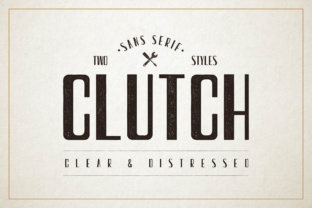
Typography is often treated as a cosmetic afterthought, but experienced practitioners know better. The fonts you choose shape perception, guide attention, and communicate values before a single word is read. Clutch and Clutch, a sans serif font built for retro-inspired work, offers something rare: deliberate character without sacrificing readability. Designed in two styles for greater flexibility, Clutch gives you the tools to build visual consistency, evoke a specific era, and maintain clarity across contexts. But like any design asset, its real value depends on how thoughtfully you deploy it.
This article explores what Clutch is, why it may serve your goals, and how to approach it with intention. Whether you are positioning a brand, planning a campaign, or building a long-term content system, understanding the strategic role of a font like Clutch can improve both your creative decisions and your operational outcomes.
What Clutch and Clutch Offers That Other Retro Fonts Do Not
Retro typography is abundant, but much of it falls into one of two traps: it is either too novel to read comfortably at scale, or it imitates vintage styles without offering enough variation for real-world use. Clutch avoids both. As a sans serif font, it carries the clean, structured lines that defined mid-century modern design, but it never forces you to choose between personality and utility.
The two-style structure is the key strategic advantage. One style leans into clean, legible forms that work well for body text, navigation, and longer reading. The other offers a distressed, weathered texture that adds authenticity and tactile warmth to headlines, packaging, or hero imagery. These two styles are designed to combine naturally, meaning you can layer them within the same project without visual conflict. This flexibility reduces the number of fonts you need to manage, which simplifies your design system and speeds up decision-making.
For professionals managing multiple projects or brands, that simplification is not trivial. Fewer font choices mean fewer variables to test, less time spent pairing typefaces, and more consistency across touchpoints. Clutch gives you a contained but expressive system rather than a single, one-note option.
Aligning Font Choice with Strategic Goals
Every design choice should trace back to a goal. Before you commit to any typeface, you need to ask what outcome you are working toward. Clutch is especially useful when your objectives involve differentiation, emotional resonance, or operational efficiency.
Consider a scenario where you are launching a product aimed at an audience that values craftsmanship, nostalgia, or authenticity. A clean but characterful font like Clutch signals that you understand those values without resorting to cliché. The distressed style can be used sparingly to telegraph heritage, while the clean style carries the functional weight of the user interface or editorial layout. Together, they create a unified visual language that supports brand recognition.
If your goal is internal productivity, Clutch offers similar advantages. Teams that work with templates, presentations, or repeated content formats benefit from having a two-style system that works out of the box. You reduce the friction of choosing new fonts for every deck or document, and you maintain a cohesive internal identity that reinforces culture and professionalism.
When you align font selection with goals rather than trends, you stop treating typography as decoration and start using it as a strategic lever.
Planning with Clutch: Where to Start and What to Test
Planning a rollout with Clutch should begin with an audit of your existing touchpoints. List every place your audience encounters your work: website, social media graphics, email newsletters, printed materials, presentations, product packaging, signage, and documentation. For each touchpoint, note the primary function of text. Is it meant to inform, persuade, guide, or evoke?
Clutch is best applied where the function aligns with its strengths. Use the clean style for any context where reading comfort is primary. This includes blog posts, product descriptions, navigation menus, and instructional content. The distressed style is better reserved for high-impact, low-word-count placements: headlines, pull quotes, badges, logos, or accent elements. Avoid using the distressed style for extended reading, as texture can reduce legibility at small sizes or over long paragraphs.
Test both styles at different sizes and on different screens before committing. What looks balanced on a desktop monitor may feel heavy on mobile. Print tests matter too. Ink spread can alter the distressed effect in ways that are hard to predict from a screen preview. Always run a few real-world samples before finalizing a production file.
Another planning consideration is contrast. Because Clutch is a sans serif, it pairs naturally with serif fonts if you need a secondary typeface for contrast. But one of its strengths is that it can also stand alone when you use both styles together. That reduces the number of fonts you need to license and manage, which is a practical advantage for small teams and independent creators.
Practical Use Cases Across Roles and Industries
The flexibility of Clutch makes it viable across a surprising range of applications. Here are several realistic scenarios where it can support specific outcomes.
Branding for a local business. A coffee shop or boutique retail store wants to communicate warmth, history, and quality. Using Clutch in its clean style for menus and signage, with the distressed style for logo marks and promotional posters, builds a rooted visual identity without requiring a full design system overhaul. The owner can produce their own materials and still maintain consistency.
Educational materials and course design. An educator or online course creator needs materials that feel approachable but credible. Clutch works well for slide decks, handout summaries, and landing pages. The clean style keeps information accessible, while the distressed style adds character to section headers and key takeaways. Students respond to visual cues that signal care and intention.
Content marketing and blogging. A blogger or publisher focused on topics like craft, history, design, or entrepreneurship can use Clutch to create a recognizable visual signature. Using the clean style for article body text and the distressed style for pull quotes or featured images creates a consistent reader experience. Over time, that consistency builds trust and recognition.
Internal communications and operations. Remote teams and small businesses often struggle with fragmented visual identity across internal documents. Adopting Clutch as a standard typeface for presentations, reports, and templates reduces noise and strengthens team identity. It costs nothing extra to implement once purchased, and it eliminates the friction of font-hunting for every new project.
Each of these use cases shares a common thread: Clutch is not chosen for its novelty but for its ability to serve a practical function while reinforcing a broader intention.
Long-Term Value and System Thinking
One of the most overlooked aspects of typography is its cumulative effect. A font used consistently across months or years becomes part of your audience's mental model of who you are. That long-term value is exactly why choosing a versatile, two-style font like Clutch is a strategic move rather than a stylistic one.
When you commit to a font system, you reduce future decision fatigue. Every new asset does not require a fresh typographic debate. You already know what works. Clutch's two-style structure means you have built-in versatility for both serious and expressive contexts without leaving your system. That containment is especially valuable for solo operators and small teams who cannot afford the overhead of managing multiple type families.
Over the long term, you also build recognition. Readers and customers begin to associate the visual texture of Clutch with your content. That association is a form of brand equity, and it accumulates quietly with every piece of communication you produce. The distressed style becomes a signature, and the clean style becomes a standard of reliability.
There is also a practical longevity to consider. Retro styles have cycles of popularity, but Clutch is rooted in design principles that predate trends. Its reference points are mid-century modern and utilitarian sans serifs, both of which have proven staying power. Choosing a font with historical grounding reduces the risk of looking dated when trends shift.
Risks of Using Clutch Without Clear Intent
No font is immune to misuse, and Clutch has its own risks when applied without a clear strategy. The most common pitfall is overusing the distressed style. Because it is visually distinctive, there is a temptation to apply it everywhere. Doing so undermines its impact and can make your materials feel noisy or unpolished. Distressed textures work best as accents, not as defaults.
Another risk is ignoring context. A font that feels appropriately retro for a coffee brand may feel out of place for a legal firm or healthcare provider. Not every audience responds well to vintage cues. If your work requires a tone of clinical precision or cutting-edge innovation, Clutch's retro character may signal the opposite of what you intend. Always test your font choice against audience expectations before committing at scale.
There is also a risk of mixing Clutch with too many other typefaces. Its two-style system is designed to reduce the need for additional fonts. If you pair it with three or four others, you dilute its cohesive effect and reintroduce the visual fragmentation that a good font system should solve. Limit yourself to one or two families total, and let Clutch carry the bulk of the work.
Finally, do not assume that a font alone solves a positioning problem. No typeface can compensate for unclear messaging, weak value propositions, or poor product design. Clutch is a tool, not a solution. Used intentionally, it amplifies good work. Used carelessly, it adds noise.
How to Use Clutch Intentionally Rather Than Randomly
Start by defining the job you need your font to do. Write down the top three functions your typography must serve. Those functions might include readability, differentiation, emotional warmth, or operational consistency. Then evaluate Clutch against each one. If it passes, commit to using its two styles in a structured way.
Create simple rules for when to use each style. For example: clean style for all body text and user interface copy; distressed style for headlines of ten words or fewer and for accent elements like badges or dividers. Write those rules down and share them with anyone who produces materials for your brand or team.
Test your choices on real audiences. Show them materials set in Clutch and ask specific questions: Does this feel trustworthy? Does it match the tone you expect? Is it easy to read? Iterate based on what you learn.
Review your use of Clutch periodically, especially as your brand or content strategy evolves. A font that serves you well in one phase may need adjustment in another. Being intentional means staying curious about whether your tools still fit your goals.
Final Observations on Typography as a Strategic Asset
Typography is rarely the most visible part of a strategy, but it is almost always present. Every piece of communication passes through a typeface, and that typeface shapes how the message is received. Clutch and Clutch, with its two-style structure and retro grounding, offers a practical way to bring intention to that shaping process.
Whether you are building a brand, planning a content system, or simply trying to produce better-looking materials with less effort, the choice of font matters more than most professionals acknowledge. By treating Clutch as a strategic asset rather than a decorative preference, you give yourself a repeatable, coherent, and flexible tool that supports your goals over time.
The best design decisions are not the flashiest. They are the ones that work quietly, consistently, and with purpose. Clutch, used thoughtfully, can be one of those decisions.