Labrint: A Decorative Floral Font for Thoughtful Design Work
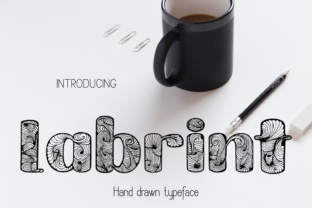
Decorative fonts often serve a specific purpose in a designer’s toolkit. They are not meant for body text or long reading passages. Instead, they bring character, mood, and a sense of occasion to a project. Labrint is one such typeface—a decorative floral font created using a drawing tablet, which gives it an organic, hand-drawn quality. The strokes carry the subtle irregularities of natural pen work, while the floral motifs embedded in each glyph add a layer of ornamentation that can elevate branding, invitations, packaging, and digital media. Understanding where Labrint fits in a real workflow, how to prepare for its use, and how to combine it with other tools helps designers and creators get the most out of this unique asset.
What Labrint Offers in a Practical Design Context
Labrint is not a utility font. It will not replace your go-to sans serif for paragraphs or your reliable serif for book layouts. Its strength lies in accent, emphasis, and atmosphere. The floral elements are woven into the letterforms themselves—swashes, leaf-like terminals, and vine-inspired curves appear throughout the character set. Because it was drawn on a tablet, the line quality retains a tactile, human feel. This makes Labrint particularly effective in projects where warmth, nature, or a handcrafted aesthetic is desired.
In practical terms, Labrint works best at display sizes—headlines, subheads, pull quotes, logos, and short phrases. It pairs well with clean, neutral typefaces that provide contrast and readability. For example, using Labrint for a product name on a cosmetic label and a simple sans serif for ingredients and instructions creates visual hierarchy while keeping the design approachable. The font’s floral nature also means it integrates naturally with botanical illustrations, watercolor textures, and organic shapes.
Before Starting: Planning and Preparation
Choosing Labrint early in the design process allows you to build the visual language of a project around its characteristics. During the planning phase, consider the mood you want to convey. Labrint evokes elegance, nature, and a handcrafted feel. It fits well with projects centered on weddings, florists, organic products, artisanal brands, and lifestyle publications. If the tone is modern and minimal, Labrint may still work as an accent, but you will need to balance it with restrained layout choices.
Before you begin designing, test Labrint with a few sample phrases in your intended software. Check how it renders at different sizes and on different background colors. Because it is decorative, legibility can drop at small sizes, so plan your hierarchy accordingly. Also confirm the font file is installed across your team’s systems or uploaded to your shared asset library. Consistency from the start avoids last-minute file swapping.
During Design: Implementation and Integration
When you bring Labrint into an active project, treat it as a design element rather than just a text layer. Consider the space around each letter—the floral swashes may extend beyond standard bounding boxes, so adjust letter spacing and line height visually. In vector editing tools like Adobe Illustrator or Affinity Designer, you can convert Labrint text to outlines to further modify shapes, remove overlapping elements, or combine letters with custom illustrations.
Layering is another effective technique. Place Labrint atop a subtle leafy pattern or inside a circular badge. Use opacity and color overlays to make it blend or stand out. Because the font was created with a drawing tablet, the brushstroke feel pairs well with other tablet-drawn elements like icons or borders. If you work in a digital environment—social media graphics, web headers, presentation slides—test the font’s performance on different screen sizes. Some floral details may become lost on small screens, so consider using an alternative lighter weight or simplifying the design.
Color choice also matters. Labrint’s organic lines work nicely with muted earth tones, pastels, or deep jewel tones against light backgrounds. Dark backgrounds can make the floral details pop, especially if you use a lighter color for the text. Experiment with gradient fills or stroke-only versions (if the font supports it) for a more illustrative feel.
After Completion: Quality Control and Asset Organization
Once your project is finalized, check every instance where Labrint appears. Look for any overlapping swashes that might cut off in print or overlap other elements oddly. In print projects, confirm that the font is embedded or converted to outlines before sending to production. For digital deliverables, ensure that the font license covers web use if you plan to embed it via CSS or as a webfont. Many decorative fonts have specific licensing terms, so read them before distributing.
Organize your project files with Labrint clearly noted in your style guide or asset list. If you reuse the font across multiple projects—say, for a brand identity—keep a dedicated folder with the font file, license documentation, and sample usage images. This will save time when handing off to other designers or revisiting the project months later.
How Labrint Complements Other Tools and Assets
Labrint interacts naturally with several common design resources. In vector software, you can pair it with botanical vector packs, floral patterns, or leaf brushes to create cohesive compositions. In photo editing tools, Labrint overlays on nature photography or macro shots of flowers can tie together a visual story. For page layout applications like InDesign, use Labrint for display headlines and decorate the chapter openers with matching floral ornaments from the font or supplemental illustrations.
Presentation tools like PowerPoint or Keynote can also benefit. Use Labrint for slide titles in a nature-themed deck or for quote slides in a talk about sustainability. Because these tools have limited typographic controls, converting Labrint to an image (export as PNG with transparency) can give you more control over placement and avoid rendering issues across different devices.
For web designers, Labrint is best used as an image-based headline element rather than a webfont. Most standard web fonts lack the decorative flair of Labrint, but you can create a graphic banner or hero title with Labrint and then use a fallback font for the rest of the site. This approach maintains visual impact while keeping load times reasonable.
Practical Implementation Tips for Consistent Results
- Preview extensively. Before committing to Labrint in a project, print a test page or view it on multiple screens. Check for any glyphs that might be too ornate for your context.
- Adjust kerning manually. Automatic spacing may not account for the sweeping swashes in Labrint. In software like Illustrator or FontLab, use optical kerning and then fine-tune pairs that look off.
- Limit usage to one or two applications per design. Overusing a decorative font reduces its impact. Reserve Labrint for hero elements and let simpler fonts do the heavy lifting.
- Combine with textures. A subtle paper or linen texture behind Labrint reinforces the hand-drawn feel. Avoid overly glossy or digital-looking surfaces that clash with the organic strokes.
- Consider outlines. If Labrint’s floral details are too thin for your application, try applying a stroke effect (if the font allows) or create a custom outline version in vector software.
Long-Term Use and Asset Management
If Labrint becomes a staple in your design toolkit, treat it as you would any other professional asset. Keep the original font file in a central repository—preferably a cloud-based font manager like Connect Fonts or Extensis. Document the license details, including where and how you can use it (personal, commercial, web, embedding in apps).
Over time, you may use Labrint across multiple brand projects. To maintain consistency, create a style reference sheet that shows the font in different colors, sizes, and layout contexts. This helps other team members or future collaborators apply it correctly. Also, check periodically for updated versions from the foundry or creator. Decorative fonts sometimes receive erratas or expanded character sets.
When the font is not in active use, archive the project files with the font included or linked. This ensures that if you revisit a project years later, Labrint will still render as intended.
Real-World Use Cases Across Different Roles
Entrepreneurs and small business owners can use Labrint for product labels, gift tags, or store signage. A handmade soap brand, for example, could set the product name in Labrint on a kraft paper label, then pair it with a clean sans for scent descriptions. The font’s floral nature reinforces the natural ingredients message without needing extra illustrations.
Marketers can leverage Labrint in email headers, landing page hero sections, or social media quote cards. It works especially well for seasonal campaigns—spring launches, Valentine’s Day, or Earth Day promotions. The key is to use it sparingly and let it draw attention to the most important message.
Educators and bloggers creating course materials or blog graphics can use Labrint for section titles, worksheets, or decorative borders. An online gardening course could use Labrint for module headings, then switch to a readable system font for lesson content. This adds visual interest without distracting readers.
Freelancers and hobbyists will find Labrint invaluable for custom invitations, thank-you cards, or personal stationery. Because the font has a handcrafted origin, it adds a personal touch to printed matter. Pair it with a simple envelope liner or a wax seal for a complete look.
Labrint is not a font you reach for every day. But when a project calls for elegance, nature, and a human touch, it becomes an essential part of the process. Understanding where it fits—before, during, and after the creative work—lets you use it with intention and produce consistent, memorable results.