Esther: A Handmade Typeface That Brings Warmth and Character to Any Project
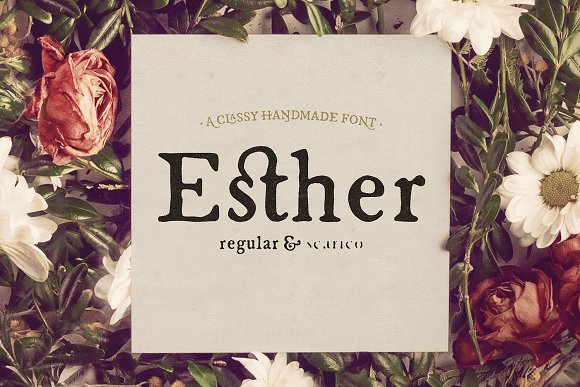
There is a growing hunger for authenticity in design. People are tired of sterile, corporate fonts that feel cold and impersonal. They want something that looks like it was made by human hands, not a machine. This is where Esther steps in. Created by Valerio Dell Edera of the Hederae Type Foundry, Esther is a handmade serif typeface that refuses to follow the modular, assembly-line approach most fonts rely on. Every letterform is drawn by hand, then carefully optimized digitally so it remains readable across sizes and mediums. The result is a typeface that feels personal, intentional, and full of life.
What Makes Esther Different from Other Serif Fonts
Most serif typefaces start as a set of modular components. Designers build letters from a kit of repeated shapes. This approach is efficient, but it often produces a look that feels mechanical. Esther takes the opposite route. Each character is individually drawn, giving it subtle variations in stroke weight, curve, and angle that you simply cannot get from a modular system. After the hand-drawing phase, the font is cleaned up digitally to ensure consistent legibility. You get the best of both worlds: the warmth of handcrafted lettering and the reliability of a well-tuned digital font.
The practical result is a typeface that reads as warm without being sloppy, and refined without feeling stiff. This balance makes Esther unusually versatile. It works in contexts where you need to signal care and craft, but also in situations where readability cannot be compromised.
Food and Beverage Packaging
Walk through any specialty grocery store or farmers market, and you will notice a pattern. The most successful small-batch products use packaging that tells a story. Esther is a natural fit for liquor bottle labels, olive oil tins, honey jars, hot sauce bottles, and craft soda cans. Its handmade quality suggests artisanal production. When you put Esther on a label, it signals to the buyer that someone cared about the details. This is especially powerful for small distilleries, microbreweries, and preserves makers who need to stand out on crowded shelves.
For example, a small-batch gin producer might use Esther Regular for the brand name on the front label to convey elegance, then switch to Esther Exhaust for a batch number or tasting notes on the back. The dry ink version adds a vintage, slightly worn feel that suggests age and tradition—even for a brand that launched last year.
Wedding Invitations and Stationery
Wedding invitations are one of the few printed pieces many people keep for years. Couples want something that feels personal and timeless. Esther delivers on both counts. The regular version works beautifully for formal invitation text, while the stylistic alternates allow you to customize the lowercase letters so no two invitations look exactly the same. Couples can use the alternates to match specific themes—rustic barn weddings, botanical garden ceremonies, or intimate city hall elopements.
Because Esther includes a full set of punctuation glyphs and numerals, you can also address envelopes, include RSVP cards, and print directional inserts without switching fonts. That consistency matters when you are trying to create a cohesive visual identity for an event.
Small Shops and Local Businesses
Independent coffee shops, bakeries, boutiques, and cafes rely heavily on their physical presence to attract customers. A chalkboard menu, a window sign, or a handwritten-style price tag can make or break the vibe. Esther works especially well for signage, menu boards, and branded materials in these settings. For a cupcake bakery, Esther Regular on the storefront window feels charming without being childish. For a tea shop, the same typeface on packaging creates a sense of ritual and quality.
The dry ink version, Esther Exhaust, is particularly useful here. Use it for shelf tags, product descriptions, or limited-time specials. The slightly imperfect ink effect implies something improvised and real—like a daily special written on a chalkboard, but with the legibility of a printed font.
Food Blogs and Digital Content
Food bloggers face a specific challenge: their content needs to feel warm and accessible, but it also has to be readable on screens of all sizes. Esther handles this well because its hand-drawn roots are visible enough to add personality, but its digital optimization ensures letters stay clear even at smaller sizes on mobile devices.
Use Esther for recipe titles, ingredient lists, and section headers. Pair it with a clean sans-serif for body text to keep the reading experience smooth. Because the typeface includes multilingual support, bloggers writing in multiple languages can maintain the same visual identity across their entire site. The stylistic alternates also let you vary the look of repeated headings, so your blog never feels visually stale.
Greeting Cards and Personal Correspondence
There is a reason handwritten-style fonts dominate the greeting card aisle. People associate hand-drawn lettering with sincerity. Esther captures that sentiment without looking like a generic script. It works for birthday cards, thank-you notes, holiday greetings, and sympathy cards. The regular version carries a tone of genuine warmth, while the dry ink version adds a nostalgic, slightly weathered quality that suits vintage or rustic card designs.
Small stationery shops and independent card makers can use Esther to differentiate their products from mass-produced options. Because the font comes with a large range of punctuation and numerals, you can also create custom date stamps, price tags, or small information cards that feel cohesive with the main design.
Two Versions, Two Moods
Esther ships as two distinct fonts, each serving a different purpose.
Esther Regular is the main font. It includes a full set of upper and lowercase serif characters, punctuation, numerals, and multilingual support. The stylistic alternates for lowercase characters give you the flexibility to change the look of individual letters without switching fonts. This version is your go-to for clean, elegant applications where legibility is the priority—wedding invitations, product labels, blog headers, and brand logos.
Esther Exhaust keeps all the features of the regular version but applies a dry ink effect. The letters appear slightly fragmented, as if printed by a vintage press running low on ink. This version is ideal for projects where you want to evoke a sense of history, wear, or authenticity. Use it for limited-edition packaging, event posters, merchandise, or any application where you want the type to feel tactile and aged. The dry ink effect is subtle enough to remain readable, but noticeable enough to change the tone of the entire piece.
What to Consider Before Using Esther
Esther is made for projects where personality matters. If you are working on a corporate annual report or a data-heavy document, a neutral sans-serif will serve you better. But if you are designing something meant to connect with people on an emotional level—a menu, a label, an invitation, a sign—Esther gives you a head start.
The hand-drawn quality means you should pay attention to spacing and sizing. Esther works best at medium to large sizes where the subtle variations in the letterforms are visible. At very small sizes, the handmade details can get lost, so consider using it for headlines and letting a simpler font handle the fine print.
Also, think about your medium. Esther looks fantastic in print, especially on uncoated paper that absorbs ink and softens edges. On screens, it holds up well in titles and short text blocks, but avoid setting long paragraphs in it. Esther is a display typeface at heart—use it where you want people to stop and look.
Who Benefits Most from Esther
Small business owners who package their own products will find Esther a practical shortcut to a polished brand identity. Bloggers and content creators who want their site to feel personal without hiring a designer will appreciate how much personality the font adds in a single typeface choice. Freelancers and educators creating presentation materials, worksheets, or handouts can use Esther to make their work feel more approachable.
Event planners and wedding coordinators often need a typeface that works across multiple printed pieces—save-the-dates, programs, menus, and signs. Esther covers that range with one family. Marketers launching a limited-edition product or a seasonal campaign can use the dry ink version to create urgency and nostalgia simultaneously.
Even hobbyists benefit. If you enjoy making your own greeting cards, labeling homemade gifts, or designing personal stationery, Esther gives your projects a professional finish without requiring advanced design skills. The stylistic alternates let you customize the look, so your work never feels cookie-cutter.
Esther in the Real World
Imagine a small tea company launching a new line of herbal blends. The packaging uses Esther Regular for the blend names, with the dry ink version printed on the back for the steeping instructions. The combination communicates both premium quality and a handmade approach. Customers who pick up the box feel like they are buying from a person, not a corporation.
Or picture a freelance photographer sending out holiday cards to clients. The card uses Esther for the greeting, with the stylistic alternates adjusted so the letters feel slightly different on each card. Recipients notice the care. That small detail strengthens the relationship.
Esther is not a one-size-fits-all tool. It is a typeface designed for situations where you want to be seen as intentional, warm, and detail-oriented. Whether you are launching a product, designing an invitation, or building a brand, it gives you the visual vocabulary to say "someone made this with care." In a world full of mass-produced content, that message matters more than ever.