Martin Crantz: A Strategic Typeface for Authentic Renaissance Typography
Choosing a typeface is rarely a neutral decision. Every font carries historical weight, cultural resonance, and a set of implicit expectations. When you select a face for a project, you are signaling something about your brand, your message, and your audience. Few fonts carry as rich a story as the one named for Martin Crantz, the technical mind behind the first press established at the Sorbonne in 1470. Alongside Ulrich Gering and Michael Friburger, Crantz brought movable type to Paris, and it was likely his skill in casting type that gave this face its enduring character. Understanding Martin Crantz’s origins, its design philosophy, and its modern applications can help you make a deliberate, strategic choice that supports your communication goals rather than undermining them.
Who Was Martin Crantz and Why Does His Typeface Matter?
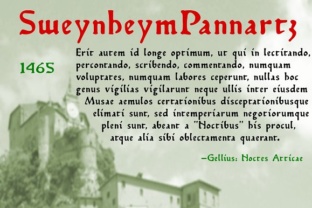
Martin Crantz (sometimes spelled Krantz) was one of the three printers who set up shop in the Sorbonne in 1470, producing the first books printed in France. While Gering and Friburger handled the business and editorial sides, historical evidence suggests Crantz was the practical craftsman who knew how to cast type itself. The typeface that bears his name is a revival of that early face, designed to recreate the texture and feel of those first Parisian imprints. Because the original was cut before 1501, it has no italic variant—a deliberate choice that preserves historical accuracy. This means a Martin Crantz font is a single-weight, upright face that relies on spacing, size, and ornament to create variety rather than on slanted forms. For modern users, this limitation is not a drawback but a design constraint that can sharpen your creative decisions.
The font has been expanded to meet contemporary demands while retaining specialized glyphs such as the -rum abbreviation, ligatures, and other Renaissance oddities. These additional characters allow you to recreate the authentic look of incunabula—books printed before 1501—without sacrificing modern readability. Whether you are working on a historical publication, a branding project that calls for old-world authority, or a creative piece that benefits from textual richness, Martin Crantz offers a unique bridge between the handcrafted past and the digital present.
Strategic Alignment: How Martin Crantz Supports Your Goals
Using Martin Crantz is not a casual choice. It is a statement about tradition, craftsmanship, and attention to detail. For entrepreneurs and small business owners who want to position their brand as rooted in quality and durability, this typeface can reinforce that message visually. A law firm specializing in estate planning, a publisher of historical fiction, or a consultancy that emphasizes time-tested methods may all find that Martin Crantz communicates gravitas in a way that a generic serif cannot. The absence of an italic forces you to think about hierarchy, spacing, and color on the page. You might use small caps, enlarged initials, or careful letter spacing to create emphasis. This can lead to more thoughtful typography overall, whether you are designing a website header, a print brochure, or a book interior.
For educators and creators, Martin Crantz offers a direct link to the history of the printed word. Using it in course materials, presentations, or online content can prompt discussions about the Renaissance, the spread of knowledge, and the role of technology in communication. It can also help you stand out in a crowded digital landscape where most fonts are designed for maximum neutrality. By choosing a face with a specific character and a clear backstory, you differentiate your work without resorting to gimmicks. The specialized glyphs such as the -rum abbreviation are not just decorative; they are functional tools for authentic historical reproduction. If you are involved in academic publishing, museum exhibits, or heritage branding, these characters can be the difference between a convincing period piece and an obvious pastiche.
When to Use Martin Crantz and How to Approach It
Martin Crantz is best deployed in contexts where its historical resonance enhances the message. Think of it as a specialty tool, not a workhorse. Reserved for titles, pull quotes, short blocks of text, or entire small publications, it works well when you want to create an atmosphere of age, authority, or scholarly depth. A blog post about the history of printing, a wedding invitation with a classic feel, or a label for a premium product like wine or stationery could all benefit from its texture. Because the face is based on a single weight, it can also be used in combination with a clean sans-serif for contrast—Martin Crantz for headings and a contemporary font for body copy. This pairing lets you keep the Renaissance character where it has the most impact while maintaining modern readability elsewhere.
Before committing to Martin Crantz for a project, consider the medium and the audience. On screen, the fine details of the specialized glyphs may be lost at small sizes. If you are designing for mobile devices or web use, test the font at various sizes to ensure the historic quirks do not become illegible. For print, especially letterpress or high-quality digital printing, the font’s texture can be stunning. The lack of italic means you cannot rely on the traditional convention of italicizing for emphasis or foreign terms. Instead, you might use small caps, underlining (where appropriate), or even inline color to create hierarchy. Planning for these constraints early ensures that your final product feels cohesive rather than compromised.
Practical Examples and Planning Tips
Imagine you are an independent publisher creating a limited edition of Thomas More’s Utopia. Using Martin Crantz for the chapter titles, drop caps, and colophon evokes the very period in which the book was written. You pair it with a readable modern serif for the body, and you include the -rum abbreviation in a few places to add flavor without overwhelming the reader. The result is a book that feels both scholarly and accessible, with a clear visual connection to its historical roots. Or consider a branding project for a small-batch distillery. The label uses Martin Crantz for the product name, with the Renaissance abbreviation on the back label adding an insider touch that whiskey enthusiasts will appreciate. The rest of the packaging uses a clean, modern layout. This combination signals tradition without looking outdated.
For planning purposes, map out your content hierarchy before choosing type sizes. Because Martin Crantz lacks italic, you will need to rely on other methods of differentiation. Decide whether you will use small caps for subheadings, larger sizes for emphasis, or color to separate sections. If you are using the font in a digital environment, consider providing a fallback font that is similar in weight and color so that users without the font installed still see a coherent design. Test readability on different screens and in different lighting conditions. And always check how the specialized glyphs render in your chosen software—some applications may handle historical characters better than others.
Risks of Using Martin Crantz Without Clear Goals
The most significant risk is that the font becomes a distraction rather than an asset. If visitors to your website or readers of your publication cannot easily process the text because of unfamiliar letterforms or low contrast, you have hurt your communication goals. Martin Crantz is not intended for long blocks of body copy at small sizes, especially on screen. Trying to use it that way can lead to eye strain and a perception that your content is difficult to access. Another risk is inconsistency. If you use Martin Crantz for one piece of collateral and a completely different style for another, you may confuse your audience about what your brand stands for. Decide ahead of time whether this font is part of a consistent visual identity or a one-off choice for a specific project. Finally, the lack of italic can be a trap for designers who are accustomed to using italics as a crutch for emphasis, foreign terms, or titles. If you do not plan for this limitation, your typography may feel flat or forced.
Long-Term Value and Decision-Making Guidance
When you invest time in understanding a font like Martin Crantz, you are building a deeper awareness of how typography shapes perception. This knowledge carries forward into every future project. You become more intentional about why you choose a particular face, how you pair it with others, and what constraints you are willing to accept for the sake of character. For marketers, this kind of deliberate decision-making translates into clearer brand positioning. For educators and creators, it means richer, more meaningful content. For entrepreneurs, it signals to customers that you care about the details.
If you are considering Martin Crantz for a project, ask yourself: Does this face support the primary message? Is its historical resonance relevant to the audience? Can I plan around the lack of italic? Will the specialized glyphs be visible and functional in my chosen medium? If the answer to these questions is yes, then Martin Crantz is not just a font choice—it is a strategic tool. Used thoughtfully, it can elevate your work from ordinary to memorable, connecting modern readers to a tradition that began in a small Parisian workshop over five centuries ago.
In a world of endless typographic options, restraint and intentionality are rare. Martin Crantz offers both. By respecting its origins and working within its constraints, you can create work that feels authentic, deliberate, and enduring. That is a goal worth pursuing regardless of the project.