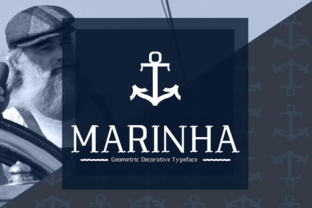
Marinha: A Nautical Geometric Typeface by Ângela Torres
Some typefaces tell a story before a single word is read. Marinha, a nautical-themed geometric decorative typeface designed by Ângela Torres, does exactly that. Its name evokes the sea, and its forms carry the crisp geometry of maritime design — think signal flags, compass roses, and the clean lines of a ship’s hull. But Marinha is not a novelty font you use once and forget. It is a disciplined decorative tool with structural clarity, making it surprisingly versatile for a wide range of creative work.
Understanding what Marinha offers, and where it fits best, can open up fresh directions for your projects — whether you design branding for a coastal business, build social media templates, or produce printed materials for events with a maritime theme.
What Makes Marinha Distinctive
Marinha sits at the intersection of two strong design traditions: geometric sans-serif letterforms and decorative nautical symbolism. At first glance, you notice the precision. The characters are constructed from clean, repeating shapes — circles, arcs, straight lines — giving each letter a measured, almost architectural quality. This is not a handwritten or organic script. It is intentional, almost modular, which makes it particularly effective when you need consistency across a set of materials.
The nautical influence appears in subtle details. Some terminals echo the shape of a ship’s cleat or a rigging knot. The proportions of certain letters recall the compact, legible markings found on maritime flags. Yet the typeface never becomes a costume. It remains a functional alphabet, readable at display sizes and surprisingly sturdy in shorter text settings.
Ângela Torres designed Marinha with a clear point of view: decorative typefaces should not sacrifice readability for personality. Every character retains enough distinction to work in headlines, logos, and signage without forcing the viewer to guess what letter they are looking at. That balance — between theme and utility — is what makes Marinha more than a niche option for seafaring projects.
Who Should Consider Using Marinha
Because Marinha carries such a specific visual identity, it helps to know which audiences and contexts it serves best. This typeface is not intended for long-form body copy or dense paragraphs. Its strength lives in short-form, high-visibility applications where the letterforms themselves carry visual weight.
- Brand designers working on identity systems for coastal hospitality, marine tourism, seafood markets, sailing clubs, or environmental organizations focused on ocean conservation will find Marinha immediately useful. Its geometric structure pairs well with clean layouts and muted color palettes inspired by sand, sea, and sky.
- Event and wedding stationery designers can use Marinha for save-the-dates, invitations, and programs tied to beachside or harborfront celebrations. The typeface signals a theme without relying on clip art or stock illustrations.
- Social media content creators who produce posts about travel, sailing, coastal living, or sustainable fishing can use Marinha for quote cards, section headers, and title slides. Its distinctive look stops the scroll without feeling forced.
- Small business owners running boutiques, cafés, or rental properties near water can incorporate Marinha into signage, menus, packaging, and promotional materials. It gives small brands a cohesive, memorable visual voice.
Practical Applications Across Formats
One of Marinha’s strongest qualities is how it adapts across mediums. Because its geometry is consistent, it scales well from small digital screens to large printed surfaces. Here are realistic ways to put it to work.
Print Projects
Marinha shines in print applications where you want impact without clutter. Consider using it for poster headlines announcing a regatta, a seafood festival, or an ocean advocacy talk. On a poster, the typeface does the decorating — you do not need extra graphic elements to communicate a nautical mood. The letters themselves suggest waves, wind, and water.
For packaging, Marinha works beautifully on labels for small-batch hot sauces, craft beers, smoked fish, or sea salt. The geometric structure feels premium and handmade at the same time. It suggests care and attention, which matters when a product’s story is tied to a specific place or tradition.
Book covers are another natural fit. A travel memoir set on the coast, a field guide to marine life, or a poetry collection with ocean themes can use Marinha for the title and author name. Paired with a clean serif for body text, the contrast feels intentional and sophisticated.
Digital Design
On screen, Marinha maintains its clarity at larger sizes. Use it in hero headers on a website for a beachfront resort or a marine conservation nonprofit. The typeface establishes atmosphere immediately, reducing the need for heavy background imagery. In a world where users scan content quickly, Marinha’s distinctive shapes can anchor a brand’s visual identity across multiple pages.
For social media, Marinha works well in carousel title cards, Instagram Stories, and YouTube thumbnail text. Keep the backgrounds simple — solid colors, subtle gradients, or soft textures — so the letterforms remain the focal point. Because the typeface already carries a strong voice, you do not need complex layouts to hold attention.
Email newsletters and landing pages for ocean-related products or services can also benefit. A bold Marinha headline at the top of a promotional email sets the tone instantly. Recipients know, within a fraction of a second, what the message is about.
Creative Approaches and Variations
Marinha does not demand a literal nautical context. Some of the most interesting uses come from designers who treat the maritime references as a springboard rather than a rulebook.
Try pairing Marinha with unexpected color combinations. Instead of navy and white, experiment with deep green and copper, or coral and charcoal. These palettes retain the typeface’s structural rigor while pushing it into new emotional territory. A brand selling outdoor gear might use Marinha in olive and orange, suggesting adventure rather than leisure.
Another approach is to use Marinha as a display accent within a larger typographic system. Let it appear only in section dividers, pull quotes, or chapter openers. This creates rhythm and surprise without overwhelming the layout. Readers get the flavor of the nautical theme without having to digest it in every line of text.
Consider combining Marinha with hand-drawn illustrations or rough textures. The contrast between the typeface’s geometric precision and organic, imperfect elements creates visual tension that feels modern and curated. This works especially well for brands that want to communicate both craftsmanship and playfulness.
Keeping Results Clear and Audience-Friendly
Because Marinha is a decorative typeface, restraint is your ally. Overusing it — or pairing it with other busy visual elements — can quickly make a layout feel chaotic or hard to read. Here are practical guidelines to maintain clarity.
- Limit Marinha to headlines and short phrases. Reserve it for titles, product names, and key calls to action. Use a simpler, more neutral typeface for body text, captions, and secondary information.
- Give it space. Marinha’s geometric shapes need breathing room. Increase letter-spacing slightly in all-caps settings, and avoid crowding the type with shadows, outlines, or heavy decorative borders.
- Test legibility at different sizes. Printed at very small sizes, some of Marinha’s finer nautical details may blur or become indistinct. Always proof your materials at the final output size before committing to a run.
- Stay consistent with brand voice. If your brand is playful and informal, Marinha’s structured geometry can still work — just soften it with casual imagery and warm colors. If your brand is formal or minimalist, let Marinha stand alone on clean white backgrounds.
Adapting Marinha for Different Goals
Different users will approach Marinha from different angles. A freelance designer building a portfolio piece has different priorities than a small business owner trying to unify their packaging. Here is how to adapt the typeface to specific goals.
For brand identity projects, use Marinha as the anchor for a complete visual system. Build a color palette around it, choose complementary typefaces for body copy, and develop supporting graphic elements — icons, patterns, or textures — that echo the typeface’s geometric logic. The result is a cohesive identity that feels intentional and memorable.
For one-off projects such as event posters or social media campaigns, Marinha can be used more freely. You do not need to build an entire system around it. Let it create impact in a single piece, then move on. This is a great way to experiment with the typeface without committing to a long-term relationship.
For editorial and publishing work, treat Marinha as a tool for hierarchy. Use it to distinguish chapter titles, subheads, and pull quotes from the main text. This guides the reader’s eye and breaks up long passages in a visually interesting way. Readers retain more information when they can see structure.
Practical Inspiration to Get Started
If you want to try Marinha in your next project, here are three concrete starting points.
- A menu redesign for a seafood restaurant. Use Marinha for the restaurant name on the cover and for category headers inside — Appetizers, Mains, Catch of the Day. Pair it with a light, readable sans-serif for the descriptions and prices. The result is elegant without being stuffy.
- A social media campaign for a coastal clean-up event. Each post features a Marinha headline with one strong word — Shore, Tide, Wave, Drift — over a photograph of the beach. The typeface adds a graphic quality that makes the images feel less like snapshots and more like statements.
- A limited-edition product label for a small-batch rum or gin. The brand name set in Marinha, with a subtle gold foil stamp, tells buyers this bottle belongs in a coastal context. The geometric letterforms feel both artisanal and modern, appealing to consumers who value design as much as taste.
Each of these ideas uses Marinha for what it does best: bringing a clear, thematic voice to a project without overwhelming the message. The typeface works because it respects both its nautical roots and its responsibility to remain readable and flexible.
Why Marinha Deserves a Place in Your Toolkit
Decorative typefaces often fall into one of two camps: charming but impractical, or technically sound but uninspired. Marinha avoids both extremes. Ângela Torres designed a typeface that honors a specific theme while giving designers real utility. You can use it across print, digital, branding, and editorial work. You can adapt it to different tones — from refined and coastal to bold and adventurous. And you can trust that its geometric structure will hold up under repeated use.
For anyone building a visual identity around the sea, or simply looking for a typeface with personality and discipline, Marinha delivers. It invites you to explore, but gives you the tools to keep your work clear and effective. That combination is rare, and it is exactly what makes this typeface worth knowing.