Helenita Book: A Practical Sans Serif Font for Everyday Design
If you have spent any time browsing font libraries or working on a design project, you know how hard it can be to find a typeface that feels both reliable and distinctive. Many sans serif fonts lean too far into either sterile neutrality or overly decorative flair. Helenita Book strikes a different balance. Created by type designer Rodrigo Typo, this sans serif font family offers a warm, approachable character while remaining versatile enough for real-world projects. Whether you are putting together a small business brochure, formatting a newsletter, or building a personal brand, Helenita Book deserves a closer look.
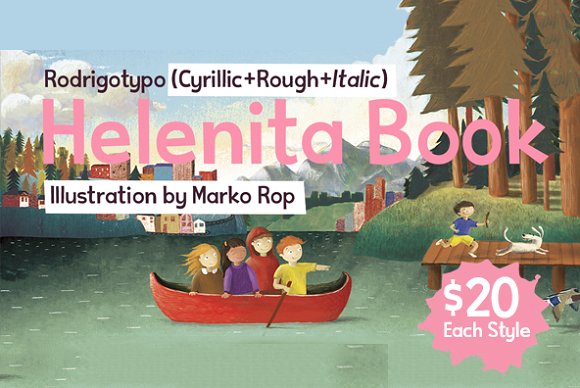
The font comes in four styles: Helenita Book Regular, Helenita Book Italic, Helenita Book Rough, and Helenita Book Rough Italic. Each variant serves a slightly different purpose, and together they give you a compact but thoughtful toolkit for consistent yet varied typography.
What Makes Helenita Book Different
At first glance, Helenita Book may appear to be a straightforward sans serif. But spend a little time with it, and you notice the subtle details. The letterforms have a soft, rounded quality that avoids feeling rigid or mechanical. Ascenders and descenders are well-proportioned, making the text easy to read both on screen and in print. The x-height is generous, which helps with legibility at smaller sizes.
Rodrigo Typo designed this font with a humanist touch. That means the shapes feel less constructed and more handwritten in spirit, even though they are clearly drawn with precision. This combination gives Helenita Book a friendly, grounded personality. It does not scream for attention, but it also does not fade into the background. It simply works.
The name "Book" hints at its intended use. This is a typeface made for extended reading and body text. Yet because of its clean lines and approachable style, it also performs well in headings, labels, and short-form content.
The Four Styles and When to Use Them
Having four styles within a single font family may not sound like much compared to sprawling superfamilies with dozens of weights. But each style in Helenita Book brings something genuinely useful to the table.
Helenita Book Regular is the backbone of the family. Use it for paragraphs, articles, product descriptions, and any situation where clarity matters most. It sets a calm, readable rhythm that works across digital and print formats.
Helenita Book Italic adds a gentle slant without losing the font's inherent warmth. It is ideal for emphasizing a word or phrase, adding a quote, or setting off a note in a document. The italic here does not feel forced or overly script-like. It stays natural and integrated.
Helenita Book Rough introduces a subtle textured effect. The edges of the letters appear slightly distressed, as if printed with a worn stamp or drawn by hand on rough paper. This style works beautifully for headers, posters, packaging, or any design that needs a tactile, artisanal feel. It adds character without compromising legibility.
Helenita Book Rough Italic combines the rough texture with the italic slant. This is the most expressive style in the family. Use it sparingly for emphasis in designs where you want to draw the eye while keeping the overall look cohesive.
Where Helenita Book Fits Into Real Projects
The best way to understand a font is to imagine where you would actually use it. Helenita Book is not a niche display typeface meant only for logos or special occasions. It is a workhorse, but a friendly one.
For bloggers and content creators, the Regular and Italic styles make long-form articles feel approachable without looking generic. The generous spacing and open letterforms help readers stay engaged, especially on mobile screens. If you run a lifestyle blog, a small online magazine, or a personal newsletter, Helenita Book can give your text a consistent, polished voice.
Small business owners and entrepreneurs often struggle with branding. You may not have a dedicated designer, yet you need your marketing materials to look professional. Helenita Book works well across business cards, flyers, social media graphics, and simple website copy. The Rough style adds a handcrafted feel to product labels or promotional banners, which is especially effective for businesses in food, crafts, wellness, or local services.
Educators and freelancers will appreciate how the font handles in presentations, handouts, and course materials. The clear letterforms reduce eye strain during long reading sessions. The Italic style helps differentiate examples, instructions, or citations without needing to switch to a completely different typeface.
Marketers and small teams creating landing pages or email campaigns can rely on Helenita Book for both headlines and body copy. Its cohesive family means you can pair the Rough style for bold callouts and the Regular style for supporting text, maintaining a unified look across the entire layout.
Practical Examples You Can Try
Imagine you are designing a simple menu for a café. Use Helenita Book Regular for the main food and drink listings, Italic for brief descriptions, and Rough for the café's name at the top. The contrast between the smooth body text and the textured header creates visual interest without needing additional graphics.
Or consider a short ebook or PDF guide. Set the chapter titles in Helenita Book Rough Italic for a distinctive opening, then use Regular for the main content. Readers will notice the shift in texture but still feel the consistency of the same typeface family running through every page.
For a personal portfolio website, you could use Regular for project descriptions and Italic for client testimonials. The font's warm personality helps your work feel accessible and human, which is often exactly what freelancers and creatives want to communicate.
Things to Consider Before Using Helenita Book
No font is perfect for every situation, and Helenita Book has its own strengths and limitations worth understanding before you commit to it.
First, the family includes only four styles. If your project requires a wide range of weights, from thin to black, you may need to supplement Helenita Book with another typeface. It works best when paired with a simple, neutral sans serif or serif for contrast. For example, you could use Helenita Book for headings and a standard serif font like Merriweather or Source Serif for long body text.
Second, the Rough styles have a distinct texture that may not suit every brand or medium. If your design needs a perfectly clean, modern, or corporate appearance, the Rough variants might feel too informal. Stick with Regular and Italic in those cases. The texture also means these styles are less ideal for very small text sizes, where the rough edges could reduce legibility.
Third, Helenita Book is not a free font. It is a premium typeface, so you will need to purchase a license for most commercial uses. Consider your budget and whether the font's unique character justifies the investment for your specific project. For many users, the quality and distinctiveness of the design make it worth the cost, especially if you plan to use it across multiple materials.
Finally, test the font in your actual workflow before buying. Download the trial version or use it in your design software to see how it looks at different sizes, on different screens, and in print. A font that looks great in a preview may behave differently once you apply letter spacing, leading, or color. Helenita Book generally handles well, but your specific usage may reveal nuances you want to check.
Who Will Get the Most Value From Helenita Book
This font is especially useful for anyone who needs a single typeface that can pull double duty as both text and display. If you are a freelancer designing your own marketing materials, a blogger wanting a consistent look across posts, or a small business owner creating labels and signage, Helenita Book gives you a cohesive visual language without requiring a full type system.
Casual users and hobbyists will appreciate that the font is easy to work with. You do not need advanced typography skills to make it look good. Just set your text, pick a style, and let the font do the heavy lifting. Beginners often worry about pairing fonts or choosing the right weight. With Helenita Book, you have fewer decisions to make because the family itself is designed to work together.
Professionals like graphic designers and educators will value the font's readability and the subtle texture of the Rough styles. It is a thoughtful alternative to overused sans serifs like Helvetica or Arial, giving projects a more distinct identity without sacrificing usability.
Ultimately, Helenita Book succeeds because it does not try to be everything at once. It focuses on being clear, warm, and adaptable. Rodrigo Typo crafted a font that feels both familiar and fresh, and that balance is harder to achieve than it looks. If you are looking for a sans serif that adds personality without shouting, this family is well worth exploring.