The Resurgence of Honest Merchant: Why Vintage Wood Type Fonts Are Shaping Modern Branding
In a digital landscape saturated with sleek sans-serifs and uniform geometric typefaces, a quiet revolution is underway. Designers, entrepreneurs, and marketers are increasingly turning to Honest Merchant—an old-time wood type font that blends rugged authenticity with refined legibility. This renewed interest is not merely a nostalgic detour; it reflects a broader shift in how brands communicate trust, heritage, and craftsmanship in an era of fleeting digital impressions.
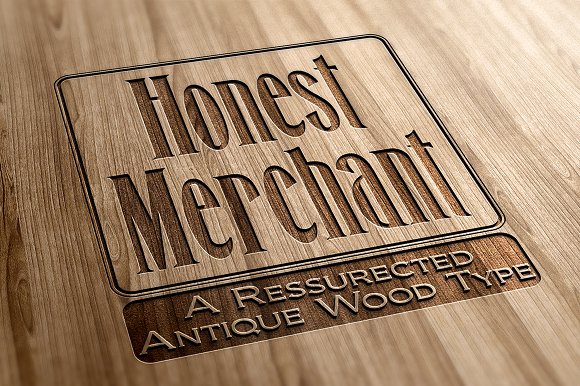
To understand why Honest Merchant has captured the attention of creative professionals and business owners alike, we must first explore what it represents. Wood type fonts originated in the 19th century, used for posters, signage, and broadsides that needed to command attention in crowded public spaces. Their bold, chunky letterforms, often with subtle irregularities, conveyed a sense of urgency and honesty. Honest Merchant revives that spirit, offering both uppercase and lowercase characters that feel hand-carved yet surprisingly versatile for contemporary applications.
The Authenticity Deficit in Modern Visual Communication
Today’s consumers are inundated with polished, algorithm-optimized visuals. From social media ads to corporate landing pages, the visual language has become homogenized. This has created what many branding experts call an “authenticity deficit”—a growing skepticism toward overly manufactured aesthetics. Honest Merchant addresses this gap by providing a typographic voice that feels human, imperfect, and grounded in tradition.
Marketers and brand strategists have noted that audiences now respond more favorably to designs that evoke a sense of history and materiality. A font like Honest Merchant does not try to be invisible; it proudly announces its presence. Its thick strokes and uneven edges whisper of ink pressed into paper, of wooden blocks worn by years of use. In a world of pixels, that material connection matters.
Consider the appeal of craft breweries, artisanal bakeries, and independent bookstores. These businesses thrive on stories of small-batch production and personal care. Honest Merchant visually reinforces those narratives. When a coffee roaster uses it on their packaging, the font itself becomes a badge of authenticity—a subtle promise that the product inside was chosen with the same deliberate care as the typeface on the label.
From Nostalgia to Strategic Differentiation
But the rise of Honest Merchant is not solely about nostalgia. It is a strategic tool for differentiation. As more brands compete for attention in narrow niches, the choice of typeface can be a decisive factor in brand recall. A startup in the sustainable goods space, for example, can use Honest Merchant to signal its commitment to timeless values, setting itself apart from competitors who default to generic modern fonts.
Entrepreneurs and freelancers, in particular, have embraced this approach because it allows them to project a distinct personality without expensive custom illustration. A freelance copywriter specializing in storytelling might use Honest Merchant on their website headers to immediately communicate a love for language and tradition. The font does the heavy lifting of establishing tone before a single word is read.
How Honest Merchant Fits Broader Industry Trends
The growing popularity of Honest Merchant aligns with several larger movements across design, technology, and consumer behavior.
The Handmade and Imperfect Aesthetic
Across product design, interior decor, and digital interfaces, there is a pronounced shift toward the handmade and the imperfect. People are weary of mass-produced perfection. Wood type fonts embody this trend perfectly. Their slight inconsistencies in stroke weight and character spacing mirror the quirks of handcrafted pottery or hand-stitched leather. Honest Merchant, with its distinct wood type heritage, sits at the center of this aesthetic. It allows brands to inject a sense of tactile warmth into digital experiences that otherwise feel cold.
For instance, a small-batch soap company might use Honest Merchant on their product labels and e-commerce site. The font’s vintage character reinforces the handmade nature of the soap, while its uppercase and lowercase variants provide enough flexibility for body text, ingredient lists, and call-to-action buttons. The result is a cohesive brand identity that feels both old and new.
The Resurgence of Physical Media and Signage
Despite the dominance of digital, physical media is experiencing a renaissance. Vinyl records, independent magazines, and hand-painted storefronts are thriving. Honest Merchant is particularly well-suited for these applications. Its bold, condensed letterforms read clearly on posters, chalkboards, and window displays. Entrepreneurs opening brick-and-mortar spaces—from coffee shops to retail pop-ups—are using wood type fonts to create storefronts that stop passersby.
A restaurant owner, for example, might commission a sign using Honest Merchant to evoke the feel of a century-old diner. The font’s strong vertical presence and classic proportions make it legible from a distance, which is essential for signage. In this context, Honest Merchant is not just a design choice; it is a functional tool for visibility and brand recall.
Typography as a Trust Signal in E-Commerce
Online shoppers are increasingly sensitive to design cues that indicate credibility. Research shows that typography significantly affects first impressions and perceived trustworthiness. Honest Merchant can serve as a powerful trust signal for e-commerce brands, especially those selling heritage products, organic goods, or artisanal items. When a font looks like it belongs on a vintage crate or a merchant’s ledger, it subconsciously reassures customers that the business is established and reliable.
Consider an online store selling heirloom seeds or cast-iron cookware. By using Honest Merchant for product titles and category headers, the brand instantly communicates that its products are rooted in tradition and quality. The font’s uppercase and lowercase options allow for hierarchy without losing the vintage character. Shoppers may not consciously notice the typeface, but they will feel its effect on their perception of the brand’s legitimacy.
Changing Workflows and Expectations for Creatives
For designers and content creators, the tools and workflows around vintage typography have evolved significantly. In the past, achieving an authentic wood type look required access to physical letterpress equipment or expensive digitized replicas. Today, Honest Merchant is available as a digital font that integrates seamlessly with modern design software like Adobe Creative Suite, Figma, and Canva. This accessibility has democratized vintage typography, enabling freelancers and small teams to use it without specialized skills or budgets.
Moreover, the growing expectation for brand consistency across multiple touchpoints—web, print, social media, packaging—has made versatile font families more valuable. Honest Merchant supports this need by offering a range of weights and styles within its wood type aesthetic. A marketer can use the bold uppercase for hero headlines, the regular lowercase for body copy, and still maintain a cohesive visual identity from Instagram posts to product boxes.
Freelancers and agencies have also found that clients respond enthusiastically to proposals that incorporate Honest Merchant. It signals that the designer has considered the brand’s narrative deeply, rather than using a default system font. This attention to typographic detail often becomes a talking point in pitch meetings, helping creatives win projects by demonstrating strategic thinking.
Practical Applications Across Industries
The versatility of Honest Merchant extends across many sectors. Here are some practical examples of how professionals are using it effectively:
- Food and beverage packaging: Coffee roasters, hot sauce makers, and craft distilleries use Honest Merchant on labels to evoke a sense of small-batch quality and tradition. The font’s sturdy characters hold up well on textured paper or kraft materials.
- Event branding: Music festivals, farmers markets, and art fairs incorporate Honest Merchant into posters, banners, and tickets. Its bold presence ensures legibility even at small sizes, while its vintage charm attracts attendees seeking authentic experiences.
- Educational and institutional materials: Museums, historical societies, and workshops use the font to connect their messaging with heritage and learning. It lends gravitas to exhibition titles and program guides without feeling stiff or academic.
- Digital content for social media: Freelance content creators and small business owners use Honest Merchant in Instagram stories, YouTube thumbnails, and email headers. The font cuts through the noise of polished, generic content, making posts feel more personal and trustworthy.
- Signage and wayfinding: Hotels, boutique stores, and co-working spaces use the font for indoor signs, directional markers, and wall quotes. Its wood type origins give these environments a curated, intentional feel.
In each of these use cases, Honest Merchant does more than decorate—it communicates a point of view. It tells the audience that care was taken, that the brand values authenticity over convenience, and that there is a story behind the product or service. This is precisely why entrepreneurs and marketers are paying attention: in an era of information overload, a font that can convey all of that in a single glance is a strategic asset.
Why People Are Paying Attention Now
Several converging factors explain why Honest Merchant has seen a surge in interest. First, the maturation of digital design tools has made vintage typography easier to implement than ever before. Second, consumer preferences have shifted toward brands that demonstrate transparency and character. Third, the broader cultural turn toward retro aesthetics—driven by film, fashion, and music—has created a receptive audience for design elements that reference the past.
Additionally, the rise of remote work and solopreneurship has empowered individuals to build brands that reflect their personal tastes. A freelancer can now choose a font like Honest Merchant because it resonates with their own values, not because a corporate style guide mandates it. This shift from top-down branding to individual expression has fueled experimentation with typefaces that carry emotional weight.
Finally, the increasing importance of sustainability and slow business models aligns with the ethos of wood type fonts. Just as slow food values tradition and care, slow branding values timeless design over trend-chasing. Honest Merchant embodies this philosophy. It is not a font designed to look fresh for a season; it is a font that has already stood the test of time. Using it signals that a brand is playing the long game.
Looking Ahead: The Role of Typography in Brand Storytelling
As we look to the near future, the role of typography in brand storytelling will only deepen. Audiences are becoming more visually literate, and they expect brands to use every design element with intention. Honest Merchant offers a template for how heritage-inspired typefaces can serve modern needs without feeling anachronistic.
Professionals who embrace this font are not just following a trend; they are participating in a larger conversation about what makes communication feel genuine. Whether used for a product launch, a website redesign, or a local event poster, Honest Merchant brings a layer of meaning that transcends words. It is a reminder that good design is not about being new—it is about being right.
For entrepreneurs and creatives looking to differentiate their work, the choice is clear. Honest Merchant is not merely a font; it is a statement of values. It says that you care about history, craftsmanship, and the power of simple, honest forms. In a world that often rewards speed over substance, that is a message worth investing in.